

300-215 Online Practice Questions and Answers
Questions 4
What is the transmogrify anti-forensics technique?
A. hiding a section of a malicious file in unused areas of a file
B. sending malicious files over a public network by encapsulation
C. concealing malicious files in ordinary or unsuspecting places
D. changing the file header of a malicious file to another file type
Questions 5
A security team detected an above-average amount of inbound tcp/135 connection attempts from unidentified senders. The security team is responding based on their incident response playbook. Which two elements are part of the eradication phase for this incident? (Choose two.)
A. anti-malware software
B. data and workload isolation
C. centralized user management
D. intrusion prevention system
E. enterprise block listing solution
Questions 6
What is the function of a disassembler?
A. aids performing static malware analysis
B. aids viewing and changing the running state
C. aids transforming symbolic language into machine code
D. aids defining breakpoints in program execution
Questions 7
An employee receives an email from a "trusted" person containing a hyperlink that is malvertising. The employee clicks the link and the malware downloads. An information analyst observes an alert at the SIEM and engages the cybersecurity team to conduct an analysis of this incident in accordance with the incident response plan. Which event detail should be included in this root cause analysis?
A. phishing email sent to the victim
B. alarm raised by the SIEM
C. information from the email header
D. alert identified by the cybersecurity team
Questions 8
An incident response team is recommending changes after analyzing a recent compromise in which:
a large number of events and logs were involved;
team members were not able to identify the anomalous behavior and escalate it in a timely manner;
several network systems were affected as a result of the latency in detection;
security engineers were able to mitigate the threat and bring systems back to a stable state; and
the issue reoccurred shortly after and systems became unstable again because the correct information was not gathered during the initial identification phase.
Which two recommendations should be made for improving the incident response process? (Choose two.)
A. Formalize reporting requirements and responsibilities to update management and internal stakeholders throughout the incident-handling process effectively.
B. Improve the mitigation phase to ensure causes can be quickly identified, and systems returned to a functioning state.
C. Implement an automated operation to pull systems events/logs and bring them into an organizational context.
D. Allocate additional resources for the containment phase to stabilize systems in a timely manner and reduce an attack's breadth.
E. Modify the incident handling playbook and checklist to ensure alignment and agreement on roles, responsibilities, and steps before an incident occurs.
Questions 9
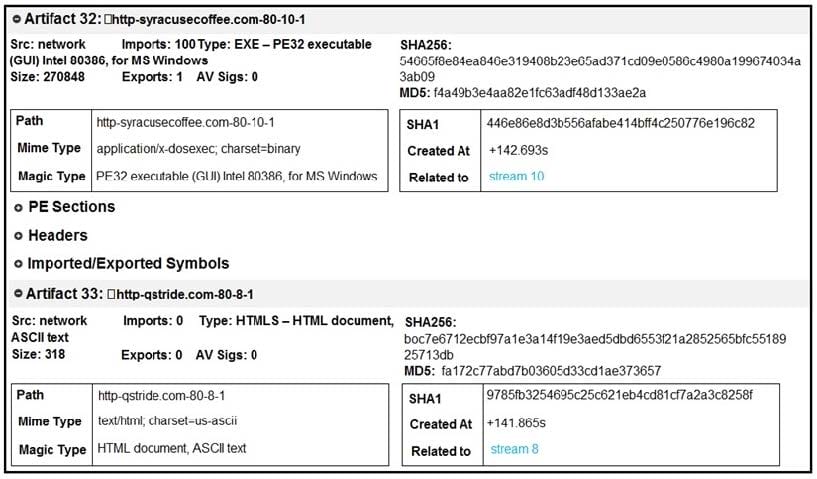
Refer to the exhibit. What do these artifacts indicate?
A. An executable file is requesting an application download.
B. A malicious file is redirecting users to different domains.
C. The MD5 of a file is identified as a virus and is being blocked.
D. A forged DNS request is forwarding users to malicious websites.
Questions 10
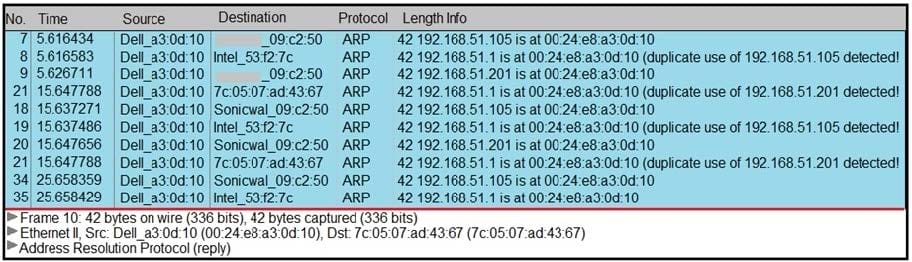
Refer to the exhibit. A security analyst notices unusual connections while monitoring traffic. What is the attack vector, and which action should be taken to prevent this type of event?
A. DNS spoofing; encrypt communication protocols
B. SYN flooding, block malicious packets
C. ARP spoofing; configure port security
D. MAC flooding; assign static entries
Questions 11

Refer to the exhibit. Which determination should be made by a security analyst?
A. An email was sent with an attachment named "Grades.doc.exe".
B. An email was sent with an attachment named "Grades.doc".
C. An email was sent with an attachment named "Final Report.doc".
D. An email was sent with an attachment named "Final Report.doc.exe".
Questions 12
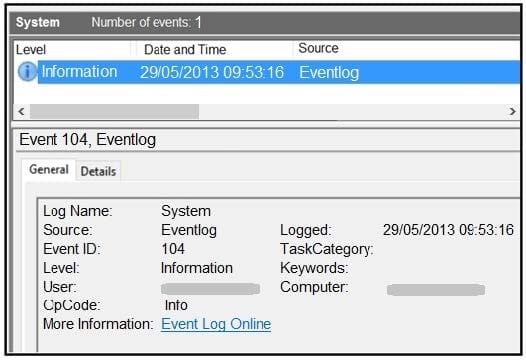
Refer to the exhibit. An employee notices unexpected changes and setting modifications on their workstation and creates an incident ticket. A support specialist checks processes and services but does not identify anything suspicious. The ticket was escalated to an analyst who reviewed this event log and also discovered that the workstation had multiple large data dumps on network shares. What should be determined from this information?
A. data obfuscation
B. reconnaissance attack
C. brute-force attack
D. log tampering
Questions 13
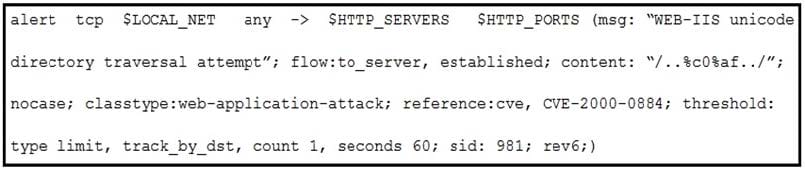
Refer to the exhibit. A company that uses only the Unix platform implemented an intrusion detection system. After the initial configuration, the number of alerts is overwhelming, and an engineer needs to analyze and classify the alerts. The highest number of alerts were generated from the signature shown in the exhibit. Which classification should the engineer assign to this event?
A. True Negative alert
B. False Negative alert
C. False Positive alert
D. True Positive alert


Home | About Us | Contact Us | FAQ | Guarantee Policy | Privacy Policy
Any charges made through this site will appear as Global Simulators Limited. All trademarks are the property of their respective owners.
Copyright © 2004-2026 pass2lead.com, All Rights Reserved.