

3102 Online Practice Questions and Answers
Questions 4
Which three types of handles can be selected for a user when creating users in system manger? (Choose three.)
A. SMTP
B. H.323
C. IBM
D. XMPP
E. undefined
Questions 5
What is the outcome of running SMnetsetup on a server that has an existing installation of session manager 601?
A. The network and date/time is configured on the server.
B. A System Manager System administrator login will be created.
C. The same version of the Session Manager software currently Installed is re-installed?
D. The current version of the Session Manager software is upgraded.
Questions 6
A technician wants to schedule a bulk operation to take place at a convenient time in the future. What are two methods for scheduling bulk operations? (Choose two.)
A. # Sh exportUpmUsers.sh -u admin -p adminl23 -t 2013:05:01:12:00:00
B. # sh exportUpmUsers.sh -u admin -p adminl23 -d 2013:05:01:12:00:00
C. Navigate to Users > User Management, click 'More Options' and select 'Import Users'. Choose 'schedule' in the options.
D. Navigate to Users > User Management, click 'More Options' and select 'Export Users'. Choose 'schedule' in the options.
Questions 7
How is request routed to a "Named" Application?
A. Session Manager uses the phase tag of a route header of the incoming request and matches it to a dial pattern then uses the associated Routing Policy.
B. Session Manager uses the route header of the incoming request and matches it to a dial pattern then uses the associated Routing Policy.
C. Session Manager uses the Request URI of the incoming request and matches it to a dial pattern then uses the associated Routing Policy.
D. Session Manager uses the termination application sequence associated to the Communication Profile of the user to route the request.
Questions 8
Application definition allows system administrators to define and manage individual applications, each with their own attributes? The definitions allow administrators to add one or such applications to which of the following?
A. application programs
B. application data sets
C. application sequences
D. application lists
Questions 9
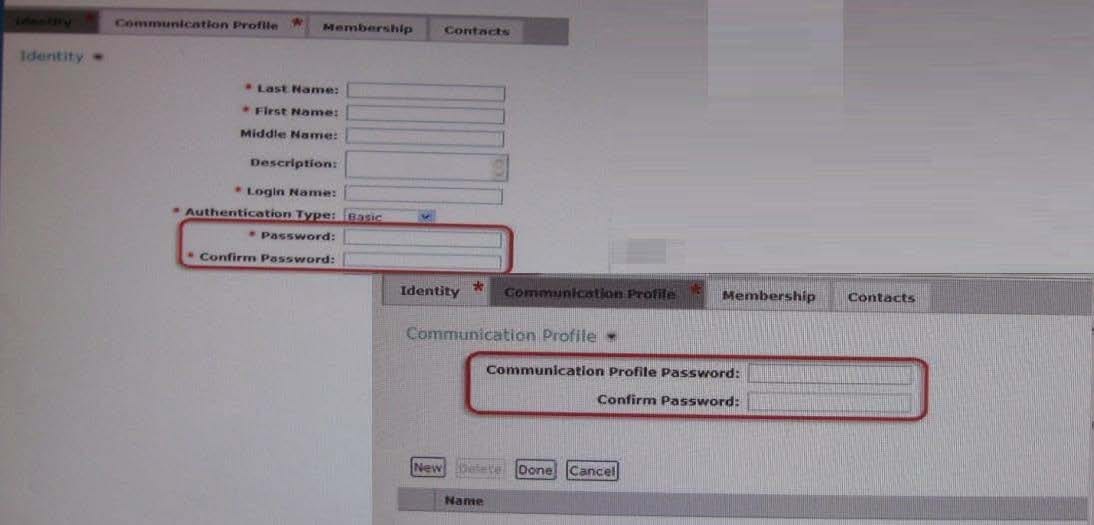
When creating a New User Profile, an administrator is asked to enter, two separate passwords for the new user. Which statement best describes the need for two different passwords?
A. The Identity password is used in authenticating the user when accessing the user's management console, while the Communication Profile is used to authenticate the user when logging in on a telephone.
B. The Communication Profile is the prime password for authenticating the user while the Identity password is a backup password used to reset the Communication Profile In cases where the prime password is forgotten.
C. The Identity password is used when logging in to a telephone that connected to the corporate network while the Communication Profile is used while logging in with a VPN telephone or the corporate network.
D. The Identity password is used when logging into a telephone in to a communication profile password enables further privileges and capability.
Questions 10
If two standalone session Managers and one standalone System Manager are going to be installed, how many IP Addresses will you need?
A. 3
B. 5
C. 6
D. 7
E. 9
Questions 11
While reviewing the Event Logs on the Session Manager, you notice an ALERT message: (OP_AFW17504) "SIP firewall white list configuration failed, retaining existing configuration." Which action should you perform when you see this alert?
A. Access the SIP firewall white list configuration and verify that the configuration is correct.
B. Access the SIP firewall configuration and change the RULE log type to none to not have these ALERTS appear in the EVENT logs.
C. Access the SIP firewall configuration and Load the ASM Default Configuration.
D. Disregard these messages as they are sent to the Event Logs and do not generate alarms.
Questions 12
Which two statements about Managed Bandwidth are true? (Choose two.)
A. If the Managed Bandwidth field is blank for a location no Call Admission Control is done for that location.
B. If the Managed Bandwidth field has a value. Session Manager keeps track of the bandwidth in use based on the calls coming out of and going to that specific location and denies new calls when the bandwidth in use reaches the limit.
C. If the Managed Bandwidth field is blank for a location, the default Call Admission Control is done for that location. Session Manager keeps track of the bandwidth in use based on the calls coming out of and going to that specific location and denies new calls when the bandwidth in use reaches the limit.
D. If the Managed Bandwidth field has a value. Session Manager keeps track of the bandwidth in use based on the calls coming out of and going to that specific location and drops old calls when the bandwidth in use reaches the limit.
E. If the Managed Bandwidth field has a value, Session Manager keeps track of the bandwidth in use based on the calls coming out of and going to that specific location and sends an alarm to an administrator when new calls reach the bandwidth the limit.
Questions 13
Which statement describes the purpose of Timer B?
A. Timer B determines the maximum allowable call duration.
B. Timer B determines the length of time Session Manager allows a telephone to ring before canceling the call and routing it elsewhere.
C. Timer B determines the maximum time period between a dispatched request and the anticipated "200 OK".
D. Timer B determines the period of time a Session Manager waits for a response before canceling the request and perhaps routes it elsewhere.


Home | About Us | Contact Us | FAQ | Guarantee Policy | Privacy Policy
Any charges made through this site will appear as Global Simulators Limited. All trademarks are the property of their respective owners.
Copyright © 2004-2026 pass2lead.com, All Rights Reserved.