

3V0-42.20 Online Practice Questions and Answers
Questions 4
Which three IPv6 features are supported in an NSX-T Data Center design? (Choose three.)
A. IPv6 OSPF
B. IPv6 static routing
C. IPv6 switch security
D. IPv6 DNS
E. IPv6 Distributed Firewall
F. IPv6 VXLAN
Questions 5
Which NSX-T feature is used to allocate the network bandwidth to business-critical applications and to resolve situations where several types of traffic compete for common resources? (Choose the best answer.)
A. Network I/O Control Profiles
B. LLDP Profile
C. LAG Uplink Profile
D. Transport Node Profiles
Questions 6
Which selection is associated with the Review Task of the Engagement Lifecycle? (Choose the best answer.)
A. Gather and document requirements, assumptions, and constraints.
B. Build, deploy, implement, and test the design.
C. Measure performance against customer's objective.
D. Create and document the logical and physical design.
Questions 7
An architect is helping an organization with the Logical Design of an NSX-T Data Center solution.
This information was gathered during the Assessment Phase:
Data between two networks connected over a public network needs to be encrypted.
Certificate authentication is required.
Dynamic route learning is preferred.
Which selection should the architect include in their design? (Choose the best answer.)
A. Deploy a Tier-0 gateway in Active/Standby mode. Configure policy-based IPSec VPN with SHA512 with RSA as the hash algorithm.
B. Deploy a Tier-0 gateway in Active/Active mode. Configure route-based IPSec VPN with SHA512 with RSA as the hash algorithm.
C. Deploy a Tier-0 gateway in Active/Standby mode. Configure route-based IPSec VPN with SHA512 with RSA as the hash algorithm.
D. Deploy a Tier-0 gateway in Active/Active mode. Configure policy-based IPSec VPN with SHA512 with RSA as the hash algorithm.
Questions 8
According to the Discover Task of the Engagement Lifecycle, which statement would be classified as a risk? (Choose the best answer.)
A. Enough power and cooling capacity is available in each rack in the data center.
B. To retain certification to provide financial services to end customers, PCI-DSS audits need to be passed.
C. A merger and acquisition process was recently completed and new company on-boarding is not completed.
D. Due to existing contracts and purchase agreements, the existing server hardware needs to be reused.
Questions 9
An NSX-T architect is working with a customer who wants to improve performance and future-proof their
workloads with a multi-site architecture.
A current-state analysis captured this information:
Latency between sites is 160ms.
Bandwidth is 2Gbps.
The MTU is 1600.
What two VMware design recommendations should the architect recommend to the organization to
achieve future-proofing? (Choose two.)
A. MTU is recommended to be 9000.
B. MTU must be at least 1700.
C. Bandwidth must be at least 10Gbps.
D. Latency RTT is acceptable.
E. Latency must be less than 150ms.
Questions 10
Which two protocols are typically used for multicast in a NSX-T Data Center environment? (Choose two.)
A. PIM Full Form
B. PIM Dense Mode
C. IGMPv2
D. PIM Sparse mode
E. IGMPv3
Questions 11
An architect is helping an organization with the Conceptual Design of an NSX-T Data Center solution.
Which three selections are requirements documented by an architect? (Choose three.)
A. Aggregate N-S throughput at any given time should be at least 10G.
B. All traffic should recover in the event of Host/Rack/ToR failure.
C. Hardware is 5 years old and new hardware is already purchased.
D. SAN storage has enough capacity to build the new infrastructure.
E. Business critical applications should have an SLA of 99.99%.
F. The Development Team are heavy on API usage.
Questions 12
Refer to the exhibits. Design Option1:
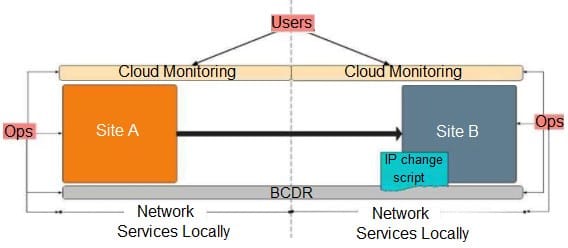
Design Option 2:
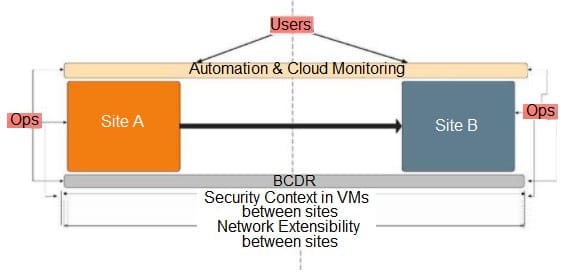
Design Option 3:
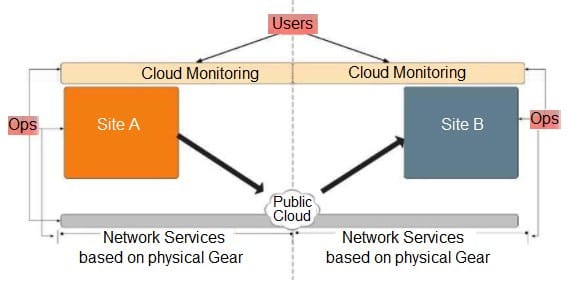
Design Option 4:
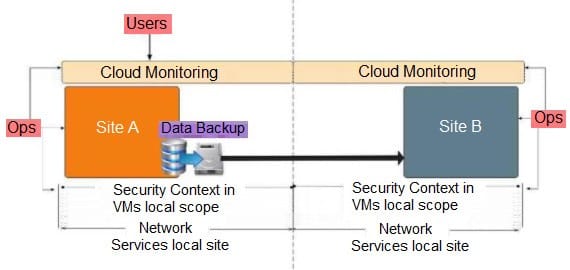
An architect is helping an organization with the Conceptual Design of an NSX-T Data Center solution.
The conceptual design includes these requirements, assumptions, constraints, and risks:
Critical applications must run across sites without changing IP address.
Business continuity and disaster recovery (BCDR) plans will leverage a second site running vSphere.
RTO/RPO must be reduced for recovery of applications on secondary site.
IT Teams require automation tools for configuration.
Which Conceptual Design would the architect recommend to the customer? (Choose the best answer.)
A. Design Option 4
B. Design Option 2
C. Design Option 1
D. Design Option 3
Questions 13
Which three assessment findings are part of a Conceptual Design? (Choose three.)
A. risks
B. host names
C. justifications
D. constraints
E. assumptions
F. vendor model


Home | About Us | Contact Us | FAQ | Guarantee Policy | Privacy Policy
Any charges made through this site will appear as Global Simulators Limited. All trademarks are the property of their respective owners.
Copyright © 2004-2026 pass2lead.com, All Rights Reserved.