

C5050-062 Online Practice Questions and Answers
Questions 4
When integrating .NET applications for deployment to an IIS server, IBM UrbanCode Deploy requires a property be set on the resource for the location of the appcmd.exe file. Where is the Windows default location for appcmd.exe?
A. C:\\Windows\System32\inetsrv
B. C:Program Files\Common Files
C. C:\\Program Files\MSBuild\Microsoft
D. C:\\Windows\Microsoft.NET\Framework
Questions 5
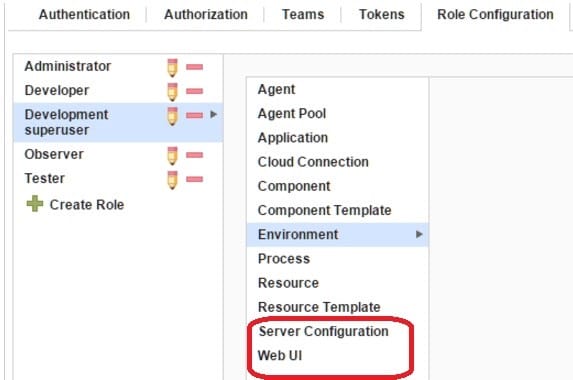
Which security types are used to secure the IBM UrbanCode Deploy server?
A. Server Configuration and Web UI
B. Security UI and Application Security
C. Application Security and DevOps Security
D. UI Security and DevOps Security
Questions 6
What is the proper way to reference the environment property "databaseUrl" in a component process?
A. ${databaseUrl}
B. //databaseUrk//
C. [databaseUrl]
D. ${p:environment/databaseUrl}
Questions 7
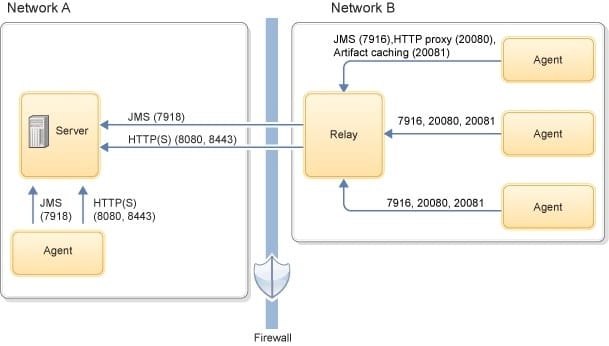
You have a complex network topology where ab IBM UrbanCode Deploy (UCD) server, the QA environment and the Production environment are all installed in different networks. A firewall is established between them. How can UCD enable the communication between the agents and the server through the firewall?
A. There should be a UCD server installed on each network. The servers create a JMS mesh (via ActiveMQ). All servers know about each other. All services are active on each server.
B. The UCD server can be configured to run agentless, so no agents are required on each network. The network administrator need only make the UrbanCode server accessible in each network.
C. An UrbanCode agent relay should be installed on each network. The agent relay connects a large group of agents to the server with a single connection, which simplifies firewall rules for communicating across networks.
D. An agent gateway should be configured in one agent on each network. This agent will act as a proxy for all communication between the agents on the same network and the server.
Questions 8
What should be defined in an IBM UrbanCode Deploy application?
A. Components, Baselines and Environments
B. Components, Environments and Processes
C. Components, Snapshots and Recourses
D. Agents, Versions and Resources
Questions 9
What is an agent?
A. An agent is a logical user-defined construct that represents a target for deployments.
B. An agent can be either a logical or physical representation of a deployed application.
C. An agent is a pre-defined construct that represents a server targeted for deployments.
D. An agent is a lightweight process that runs on the target host and communicates with the IBM UrbanCode Deploy server.
Questions 10
A customer shows interest in IBM UrbanCode Deploy (UCD) but seems hesitant about purchasing IBM's solution. What should you share as the main value propositions to help this customer adopt UCD?
A. With UCD, you will be able to accelerate your release pace to get to market faster, decrease expensive failures, and scale for growth.
B. UCD will ensure that your developers will produce bug-free code each time they check in.
C. UCD will map your enhancement requests, defect work items, and feature changes to requirements.
D. UCD will raise the social media presence for your company by at least 20% in the first year of use.
Questions 11
Which file contains the step definitions for a Deploy plugin named FileUtils?
A. FileUtils.config
B. FileUtils.props
C. Plugin.xml
D. Plugin.config
Questions 12
Which three Linux operating systems are supported for installation of the IBM UrbanCode Deploy server?
A. Centos
B. Red Hat Enterprise Linux
C. Gentoo
D. SUSE Linux Enterprise Server
Questions 13
What is the IBM definition of "DevOps"?
A. A methodology for software development that divides tasks into short phases or work and frequent reassessment and adaptation of plans with an emphasis on team collaboration
B. AN enterprise capability for continuous software delivery that enables organizations to seize market opportunities, respond more rapidly to customer feedback, and balance speed, cost, quality and risk
C. A system for increasing development efficiencies by transitioning core lean manufacturing principles over to software development practices in order to eliminate waste and amplify learning.
D. An approach for continuous improvement in software and systems delivery, which allows IBM customers to achieve greater value from their investment in software and systems technologies


Home | About Us | Contact Us | FAQ | Guarantee Policy | Privacy Policy
Any charges made through this site will appear as Global Simulators Limited. All trademarks are the property of their respective owners.
Copyright © 2004-2026 pass2lead.com, All Rights Reserved.