

CPA-TEST Online Practice Questions and Answers
Questions 4
An auditor's responsibility to express an opinion on the financial statements is:
A. Implicitly represented in the auditor's standard report.
B. Explicitly represented in the opening paragraph of the auditor's standard report.
C. Explicitly represented in the scope paragraph of the auditor's standard report.
D. Explicitly represented in the opinion paragraph of the auditor's standard report.
Questions 5
Which of the following risks may be assessed in nonquantitative terms?
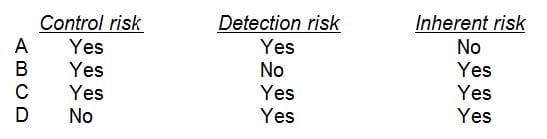
A. Option A
B. Option B
C. Option C
D. Option D
Questions 6
Analytical procedures performed in the final review stage of an audit generally would include:
A. Reassessing the factors that assisted the auditor in deciding on preliminary materiality levels and audit risk.
B. Considering the adequacy of the evidence gathered in response to unexpected balances identified in planning.
C. Summarizing uncorrected misstatements specifically identified through tests of details of transactions and balances.
D. Calculating projected uncorrected misstatements estimated through audit sampling techniques.
Questions 7
The most likely result of ineffective internal control policies and procedures in the revenue cycle is that:
A. Irregularities in recording transactions in the subsidiary accounts could result in a delay in goods shipped.
B. Omission of shipping documents could go undetected, causing an understatement of inventory.
C. Final authorization of credit memos by personnel in the sales department could permit an employee defalcation scheme.
D. Fictitious transactions could be recorded, causing an understatement of revenues and overstatement of receivables.
Questions 8
The inflation rate measures:
A. The rate at which nominal GDP increases.
B. How the price of a particular good changes over time.
C. How nominal interest rate changes over time.
D. The rate at which the overall price level increases.
Questions 9
If a group of consumers decide to boycott a particular product, the expected result would be:
A. An increase in the product price to make up lost revenue.
B. A decrease in the demand for the product.
C. An increase in product supply because of increased availability.
D. That companies in the industry would experience higher economic profits.
Questions 10
The term underwriting spread refers to the:
A. Commission percentage an investment banker receives for underwriting a security lease.
B. Discount investment bankers receive on securities they purchase from the issuing company.
C. Difference between the price the investment banker pays for a new security issue and the price at which the securities are resold.
D. Commission a broker receives for either buying or selling a security on behalf of an investor.
Questions 11
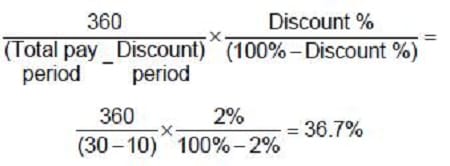
When a company offers credit terms of 2/10, net 30, the annual interest cost, based on a 360-day year, is:
A. 24.0 percent.
B. 35.3 percent.
C. 36.0 percent.
D. 36.7 percent.
Questions 12
Which of the following must be included in a company's summary of significant accounting policies in the notes to the financial statements?
A. Description of current year equity transactions.
B. Summary of long-term debt outstanding.
C. Schedule of fixed assets.
D. Revenue recognition policies.
Questions 13
Advertising costs may be accrued or deferred to provide an appropriate expense in each period for:
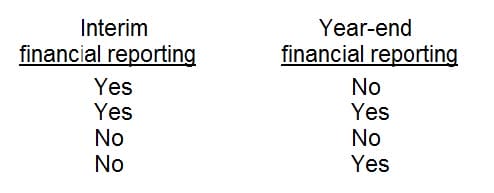
A. Option A
B. Option B
C. Option C
D. Option D


Home | About Us | Contact Us | FAQ | Guarantee Policy | Privacy Policy
Any charges made through this site will appear as Global Simulators Limited. All trademarks are the property of their respective owners.
Copyright © 2004-2026 pass2lead.com, All Rights Reserved.