

HPE6-A49 Online Practice Questions and Answers
Questions 4
Refer to the exhibit.
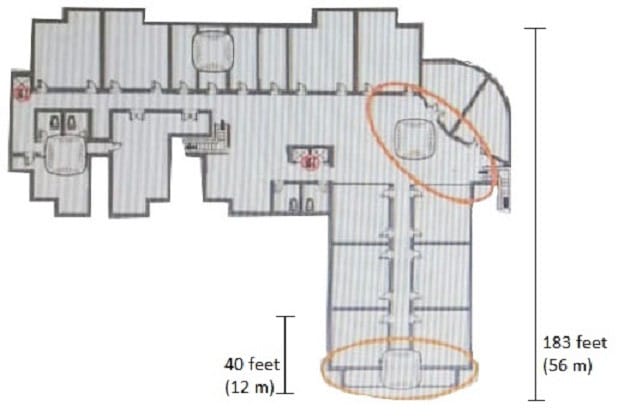
A casino and a retail space has an existing Aruba network with Aruba AP-335s. The customer wants to
deploy Meridian and enable proximity-based campaigns. The exhibit shows a segment of the floor plan.
When visitors enter the areas circled in the exhibit, they should receive a targeted notification about
promotions and sales.
What should the architect explain to the customer about how to finish the solution?
A. This solution will require about 6 battery-powered beacons, which can be managed by the APs.
B. While these APs cannot act as beacons, they have a USB slot that accepts USB beacons.
C. The customer can enable the built-in BLE capability in the AP-335 radio to meet these requirements.
D. The customer must remember to purchase a Meridian Maps license with the Campaigns license.
Questions 5
A hospital needs a wireless solution which will provide guest access for patients and visitors, as well as for medical staff. In addition to laptops and tablets, staff have wireless voice communicator devices. Some medical equipment also connects wirelessly.
How can the network architect help to ensure that patient and visitor internet use does not interfere with more vital hospital applications?
A. Deploy IntroSpect to monitor patient and visitor traffic.
B. Plan a bandwidth contract for the guest role in the MC firewall.
C. Deploy dedicated Air Monitors (AMs) at about one-fourth the density of APs.
D. Ensure that the guest SSID has a password associated with it.
Questions 6
Refer to the exhibit.
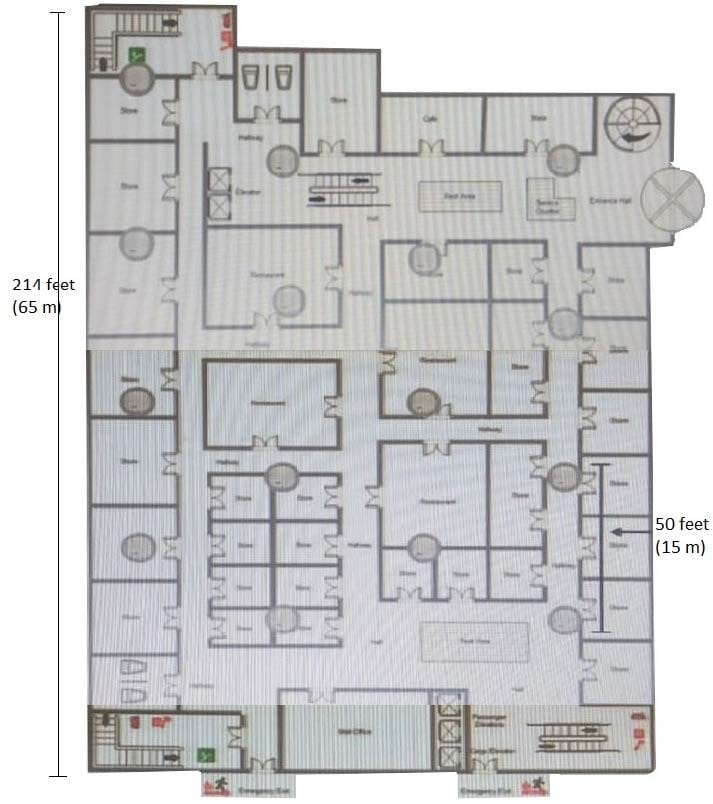
A mall has an existing Aruba solution with 15 AP-335s. The mall now wants to add Meridian and location-based services, in particular blue dot wayfinding. The customer plans to use the built-in beacon in the existing AP radios. These Meridian licenses have been proposed: 1x Aruba Meridian Maps 1x Aruba Meridian Blue Dot Nav Which concern should the architect raise about this plan?
A. Separate beacons should be deployed to provide proper coverage for wayfinding.
B. Only the Blue Dot Nav license is required to meet the customer requirements.
C. The customer requires wireless sensors to manage the beacons in the AP radios.
D. The existing AP radios do not support beacon functionality.
Questions 7
Refer to the exhibit.
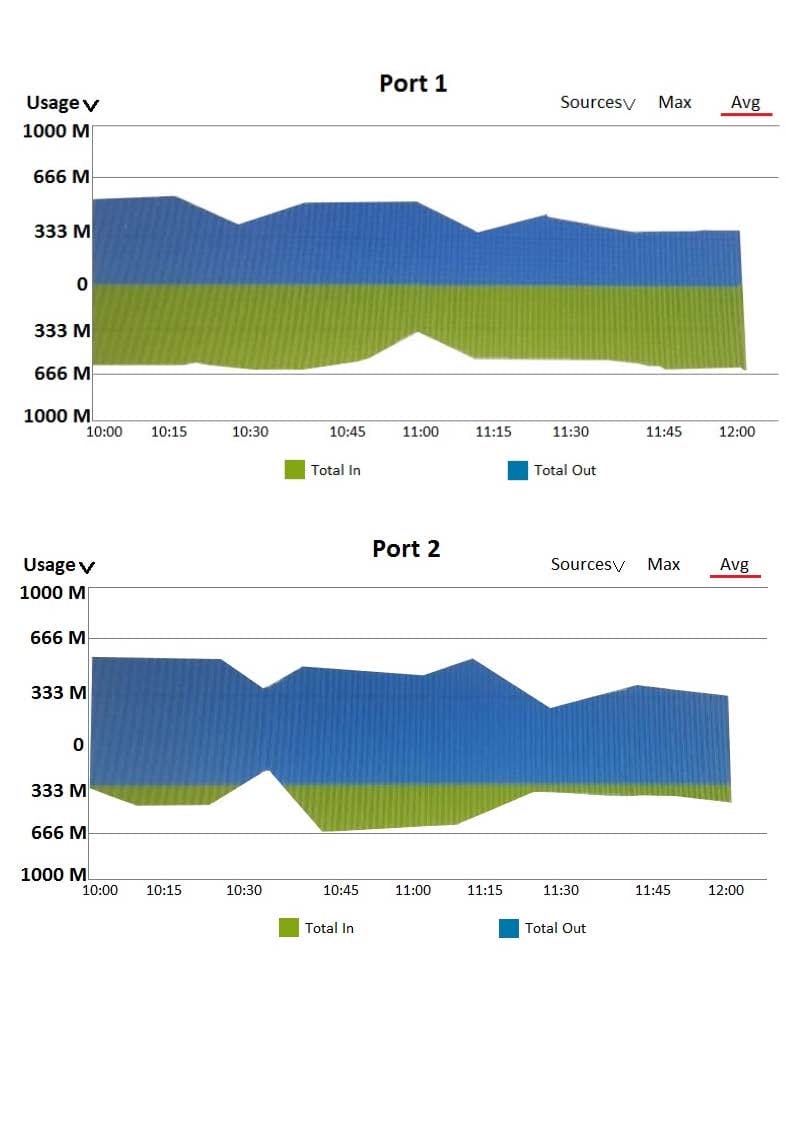
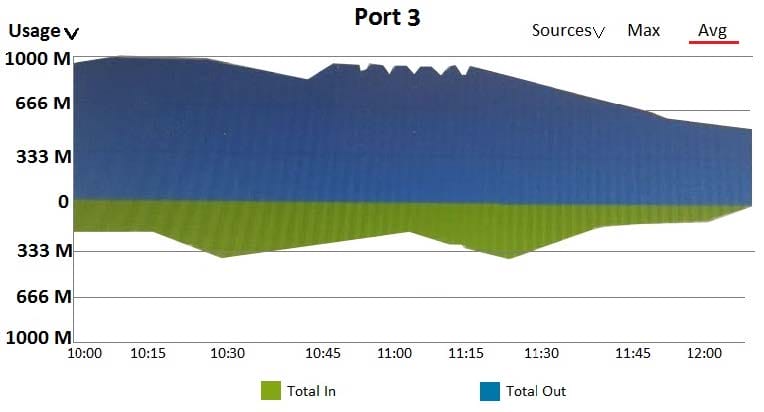
A customer needs a wired network upgrade and has complained about performance issues. The architect has collected information about traffic flow on several switch ports in different locations across the network, and the results are shown in the exhibit. Each of these ports is a 1Gbps port.
What can the architect conclude?
A. None of these ports show any periods of congestion.
B. Port 1 shows periods of congestion, other ports are not congested.
C. Port 3 shows periods of congestion, other ports are not congested.
D. All of the ports show serious congestion.
Questions 8
A university has a dormitory with several floors. Currently, APs are deployed in the hallways about every
50 feet (15 m). The university has several issues with the existing network:
Students complain that the wireless network is very slow, and IT staff have observed a low signal in the
student rooms.
Students want to connect some equipment, such as gaming consoles and IP TVs, on Ethernet, but the
dorm rooms just have one Ethernet port.
What could the architect plan to resolve all of these pain points?
A. Deploy an AP 335 inside each dorm room.
B. Keep the existing APs, but add more in the hallways to increase signal strength.
C. Replace the existing APs with AP 345s and add more Ethernet ports to each room.
D. Deploy an AP 303H inside each dorm room.
Questions 9
A hospital needs an upgrade to 802.11ac for its wireless network, which needs to provide complete coverage. The hospital has a concrete exterior and uses drywalls for all of the interior walls with a few exceptions as mandated for safety. The building has 10 foot (3m) ceilings. The legacy APs were deployed in the hallway, but the customer is open to deploying APs in any room such as reception areas, patient rooms, operating rooms, treatment rooms, and lounges. The wireless network must support wireless medical devices, voice communicators for medical staff, laptops in nurse stations, medical staff tablets, and visitor and patient personal devices. All of these devices support both the 2.4GHz and 5GHz band. The exhibits below show one wing of one floor of the hospital. This wing is about 14,000 square feet (1300 sq. m). This area has up to: 40 concurrent patients and visitors, who might have up to two devices 40 concurrent staff members, who might have up to three devices About 100 medical and other types of wireless devices
Several of these wireless medical devices are in the X-ray and X-ray control rooms. The architect has already planned to place APs in stairwells on another floor.
Which AP plan for this wing of this floor meets the customer needs?
A.
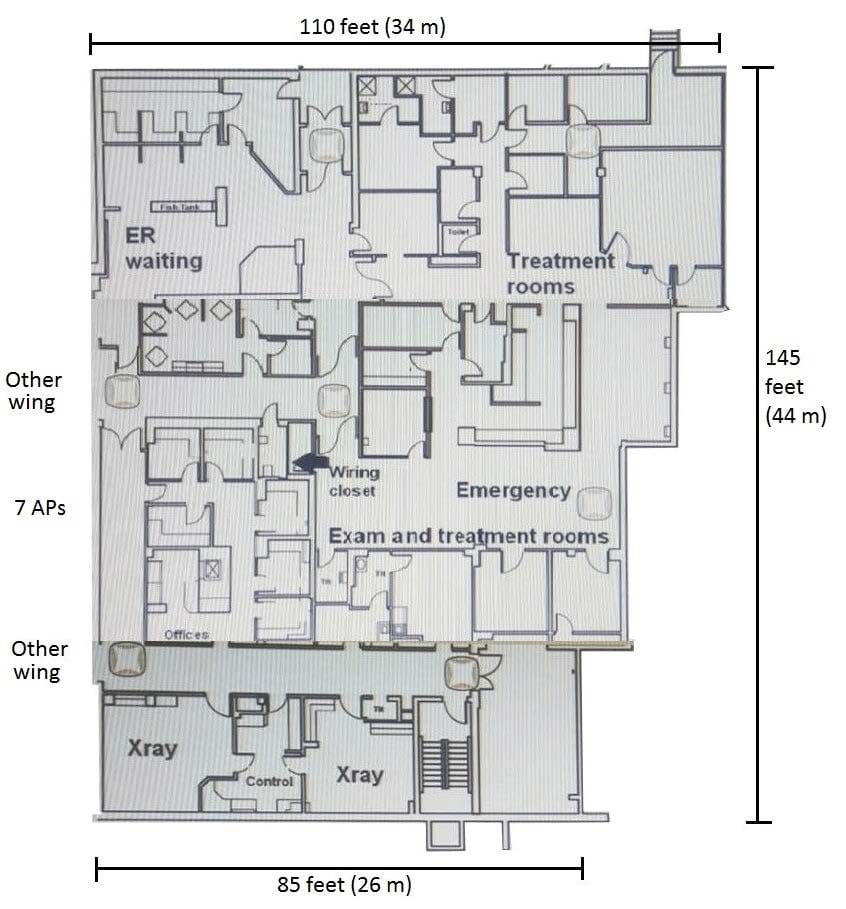
B.
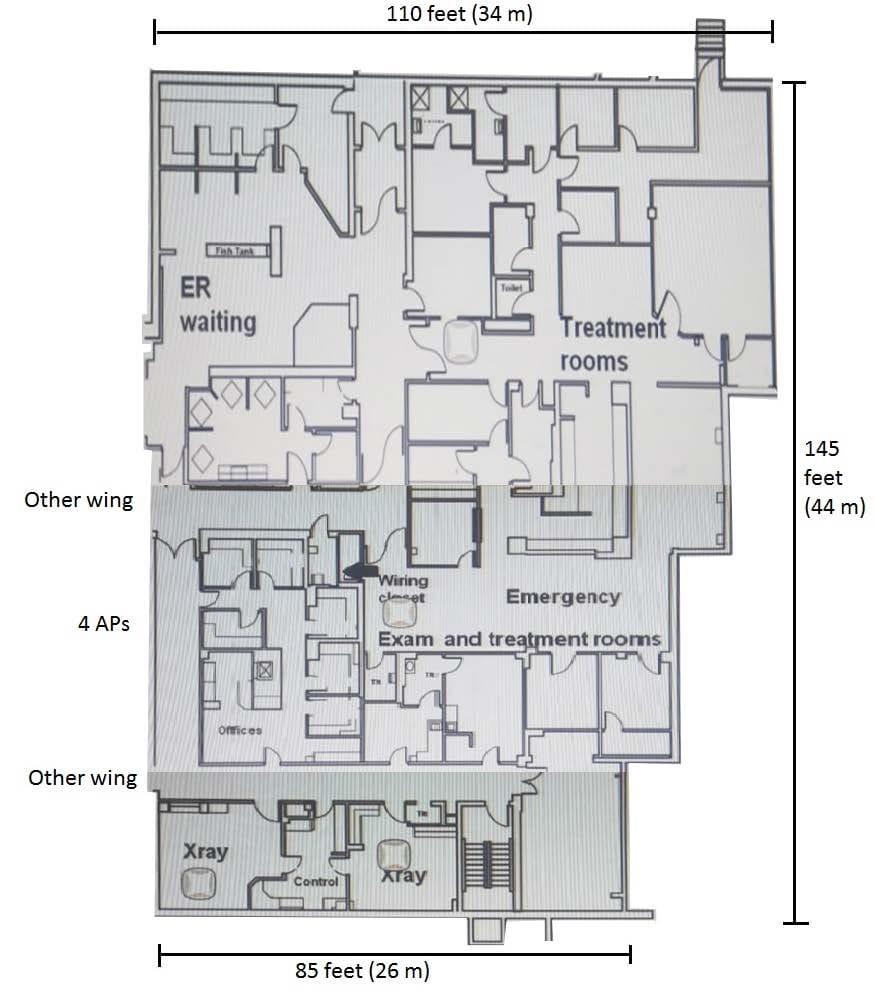
C.
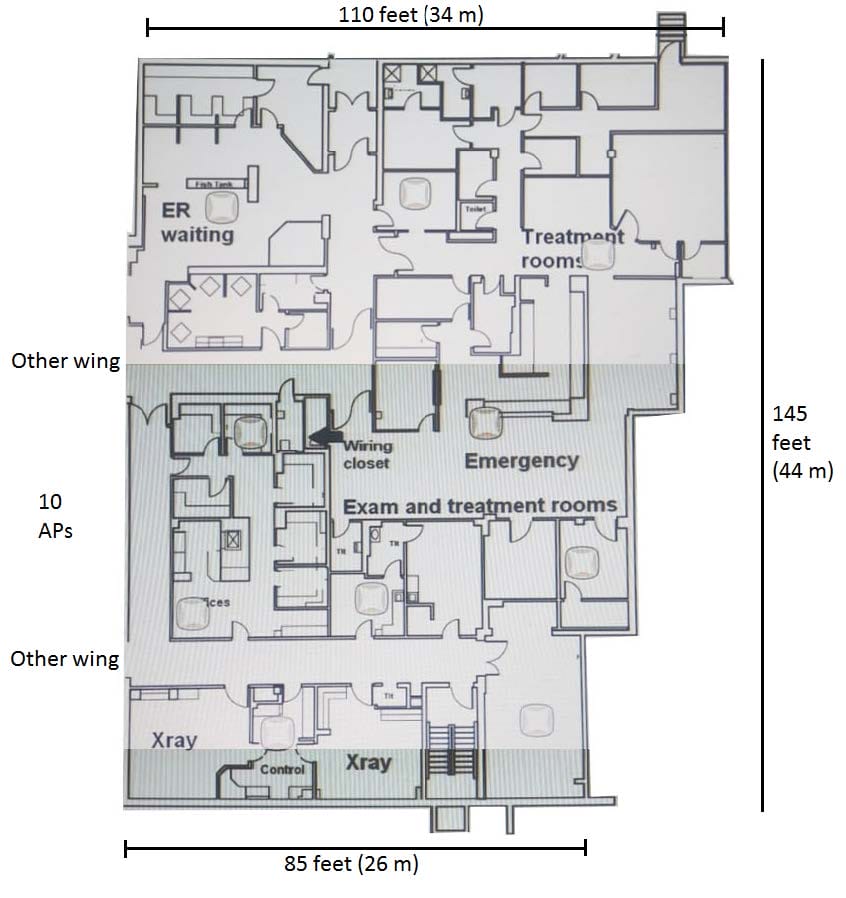
D.
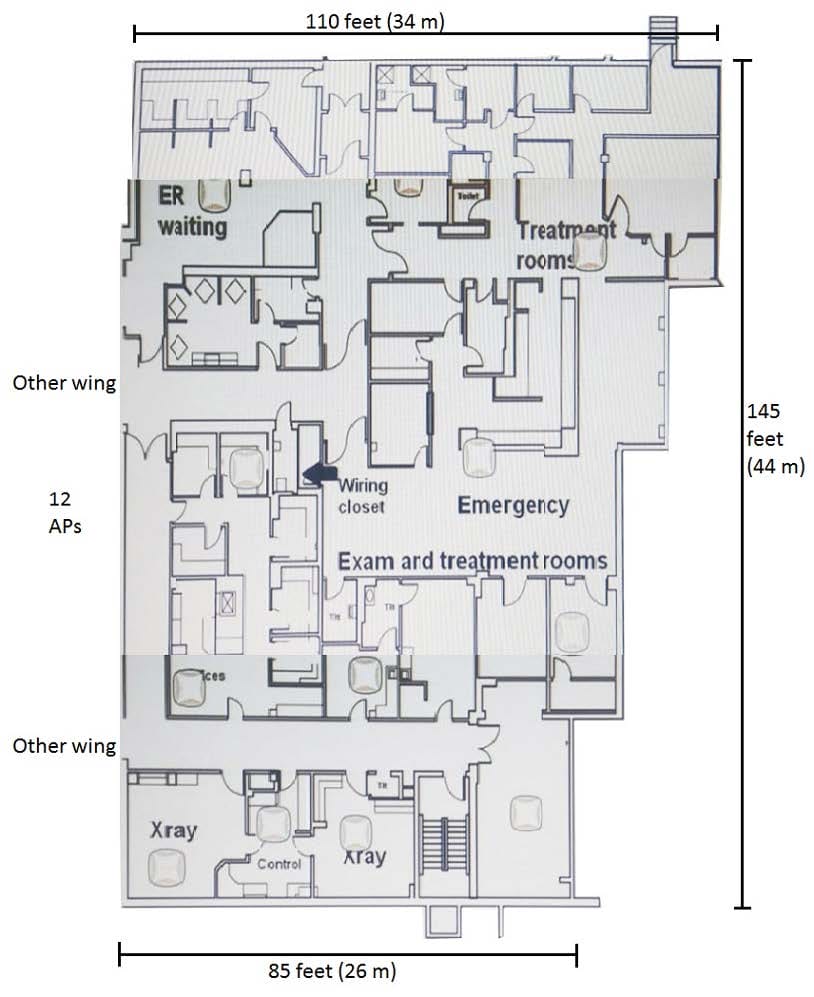
Questions 10
Refer to the exhibit.
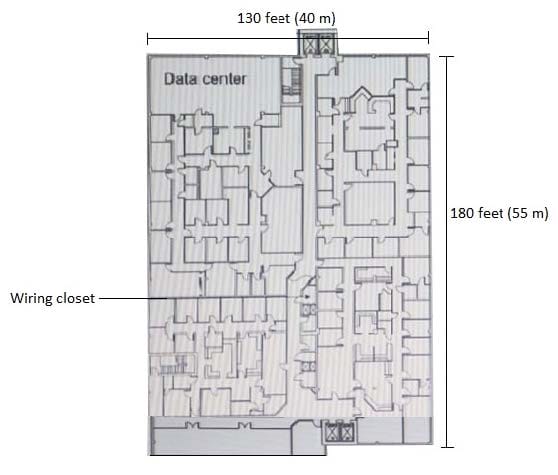
The customer requires a solution for the writing closet shown in the exhibit. The closet serves the entire floor, which is wired for CAT5e cable. The closet has four CAT5e cables to the data center 110 feet (34 m) away. The switch or switches in this closet will need to support 100 wired endpoints and 16 AP-345s. The switch or switches must connect to the network core, Aruba 5406R switches, in the data center on uplinks that provide at least 20 Gbps bandwidth total.
What is one benefit of an Aruba solution for meeting these requirements?
A. AOS-Switches can meet the uplink bandwidth needs with an extensive array of choices for transceivers.
B. Aruba PoE+ ports can provide more than 30W of power even to APs at the fat end of the floor.
C. Aruba Smart Rate ports enable switches to achieve the required uplink speeds without expensive re-cabling.
D. Aruba conditioning mode cables enable 10GbE SFP+ of 40GbE QSFP+ connections on copper cabling.
Questions 11
A customer has an existing Aruba wireless solution to provide wireless access for employees. The solution includes APs, mobility controllers (MCs) at the network core, and a Mobility Master (MM). A customer would like to set up a separately managed guest network and have the traffic go directly to the DMZ.
What should the architect suggest as the simplest solution that meets the requirements?
A. Add APs in a dedicated AP group to support only the guest network SSID.
B. Have a dedicated mobility controller in the DMZ managed by the same MM.
C. Double the number of APs and controllers
D. Use MultiZone, and put a mobility controller in the DMZ.
Questions 12
Case study
A retailer needs a wireless and wired network upgrade, as well as an authentication and access control solution for a network that includes a main office with a three-floor building and six branch sites. The branch users all use resources at the main corporate office. Branch office employees will use wireless connections. At the main office, employees use wired and wireless connections. The customer wants the strongest authentication for employee wireless connections. It is also important that the MC role-based firewall can implement consistent access controls on employee connections no matter where the employees connect and no matter how they connect (wirelessly or, at the main site, wired). The customer also needs to provide complimentary wireless access for guests. Guest should be redirected to a portal, through which they can register and login. The customer would like two SSIDs, CompanyXEmployee and CompanyXGuest. The company wants to divide employees in two groups, managers and staff. In the corporate network, managers should only have access to Server Group Managers and staff should only have access to Server Group Staff. Each server group includes necessary services such as domain and DHCP, as well as servers that the employees access to do their jobs. All employees should also have access to the Internet. Guests should only have HTTP and HTTPS access, and only to the Internet.
The customer has: a maximum of 1000 employee devices a maximum of 100 guest devices at the same time
500 devices on wired ports at the main site, which will be supported by 12 new AOS-Switches (mostly employee laptops, as well as a few non-802.1X capable printers, which should just communicate with print servers) The devices used by employees include 450 company-issued laptops, which the company wants to screen for security issues and violations of security policies. All authentications are assumed to be concurrent.
To fulfill the requirements for the wireless network upgrade, the architect plans to propose: 5 RAPs at each of 6 branch sites 60 APs at the main site
The architect will also propose an MM and ClearPass. The architect still needs to plan the Mobility Controllers (MCs). The customer requires high availability for wireless services and redundancy for the MCs. If a single MC fails, the network must continue to function without impact. If an MC fails, the customer must also receive a replacement component for the failed component by the next business day so that their IT staff can install it and get the network back to normal operation as soon as possible. Software upgrades must also be seamless, without the introduction of any downtime for wireless services, and the customer needs to be able to obtain the latest software over the lifetime of the solution for the next several years.
Which plan for authentication meets the customer needs?
A. Employee SSID = WPA2-802.1X, Guest SSID = WPA2-PSK, Wired edge ports = No authentication
B. Employee SSID = WPA2-802.1X, Guest SSID = Captive portal, Wired edge ports = No authentication
C. Employee SSID = WPA2-802.1X, Guest SSID = Captive portal, Wired edge ports = 802.1X + MAC-Auth
D. Employee SSID = WPA2-PSK, Guest SSID = MAC-Auth, Wired edge ports = MAC-Auth
Questions 13
What is one requirement for ensuring that MCs can update their software without the need for a maintenance window?
A. MCs must be managed by an MM and connected to the same switch.
B. MCs must be in a cluster and connected in the same VLANs.
C. MCs must be directly connected on at least one port.
D. MCs must have AP licenses assigned to them in a dedicated local pool.


Home | About Us | Contact Us | FAQ | Guarantee Policy | Privacy Policy
Any charges made through this site will appear as Global Simulators Limited. All trademarks are the property of their respective owners.
Copyright © 2004-2026 pass2lead.com, All Rights Reserved.