

HPE6-A84 Online Practice Questions and Answers
Questions 4
Refer to the scenario.
A customer has an Aruba ClearPass cluster. The customer has AOS-CX switches that implement 802.1X authentication to ClearPass Policy Manager (CPPM).
Switches are using local port-access policies.
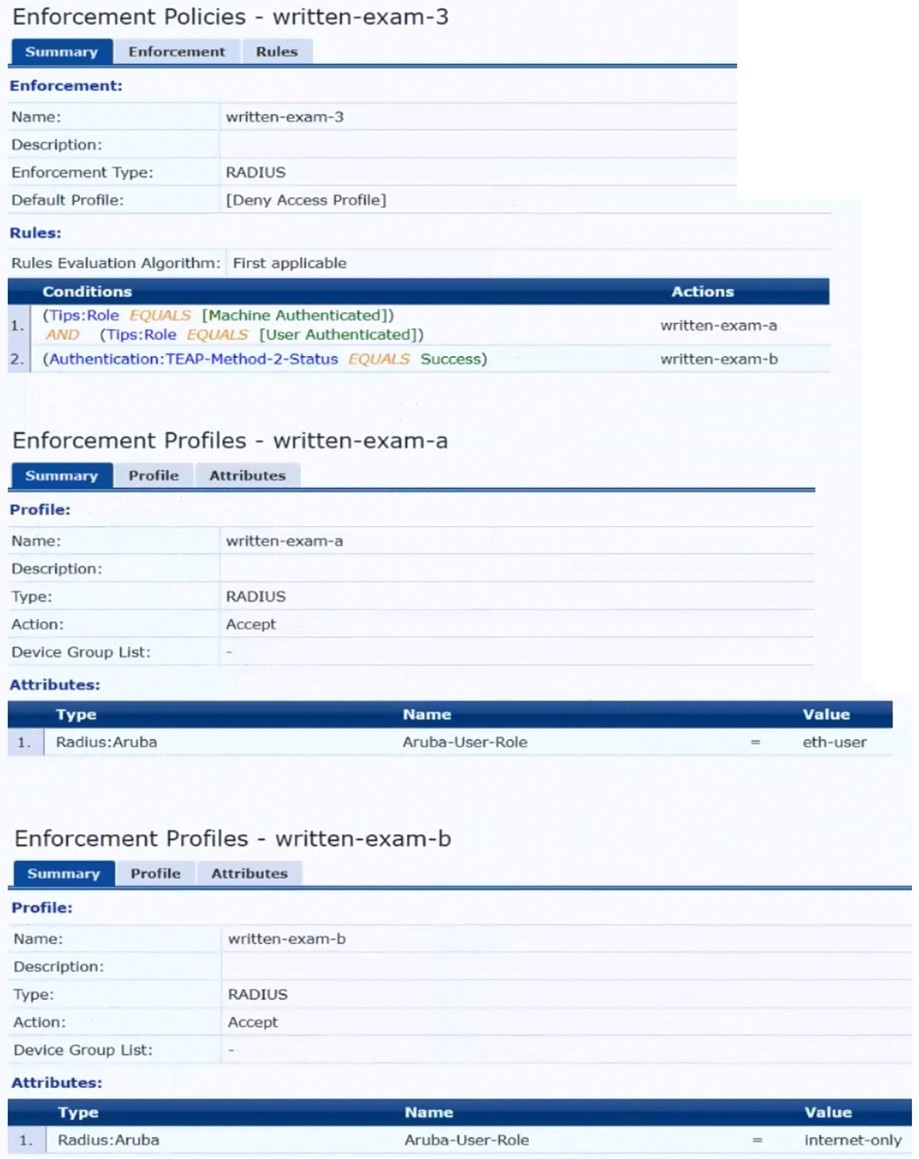
The customer wants to start tunneling wired clients that pass user authentication only to an Aruba gateway cluster. The gateway cluster should assign these clients to the "eth- internet" role. The gateway should also handle assigning clients
to their VLAN, which is VLAN 20.
The plan for the enforcement policy and profiles is shown below:
The gateway cluster has two gateways with these IP addresses:
Gateway 1
1.
VLAN 4085 (system IP) = 10.20.4.21
2.
VLAN 20 (users) = 10.20.20.1
3.
VLAN 4094 (WAN) = 198.51.100.14
Gateway 2
1.
VLAN 4085 (system IP) = 10.20.4.22
2.
VLAN 20 (users) = 10.20.20.2
3.
VLAN 4094 (WAN) = 198.51.100.12
VRRP on VLAN 20 = 10.20.20.254
The customer requires high availability for the tunnels between the switches and the gateway cluster. If one gateway falls, the other gateway should take over its tunnels. Also, the switch should be able to discover the gateway cluster regardless of whether one of the gateways is in the cluster.
Assume that you are using the "myzone" name for the UBT zone.
Which is a valid minimal configuration for the AOS-CX port-access roles?
A. port-access role eth-internet gateway-zone zone myzone gateway-role eth-user
B. port-access role internet-only gateway-zone zone myzone gateway-role eth-internet
C. port-access role eth-internet gateway-zone zone myzone gateway-role eth-internet vlan access 20
D. port-access role internet-only gateway-zone zone myzone gateway-role eth-internet vlan access 20
Questions 5
Refer to the scenario.
A customer requires these rights for clients in the "medical-mobile" AOS firewall role on Aruba Mobility Controllers (MCs):
1.
Permitted to receive IP addresses with DHCP
2.
Permitted access to DNS services from 10.8.9.7 and no other server
3.
Permitted access to all subnets in the 10.1.0.0/16 range except denied access to 10.1.12.0/22
4.
Denied access to other 10.0.0.0/8 subnets
5.
Permitted access to the Internet
6.
Denied access to the WLAN for a period of time if they send any SSH traffic
7.
Denied access to the WLAN for a period of time if they send any Telnet traffic
8.
Denied access to all high-risk websites
External devices should not be permitted to initiate sessions with "medical-mobile" clients, only send return traffic.
The exhibits below show the configuration for the role.
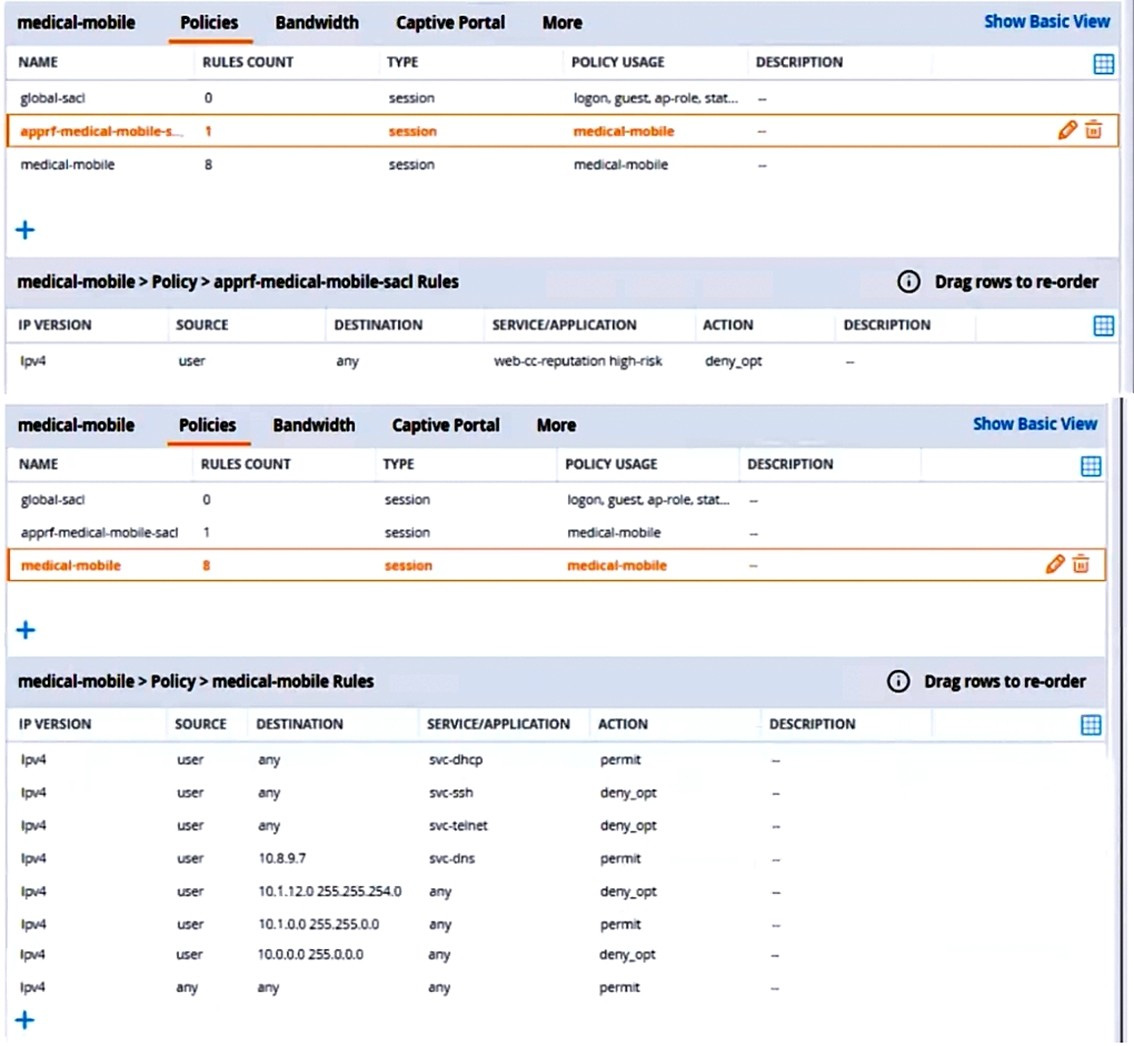
What setting not shown in the exhibit must you check to ensure that the requirements of the scenario are met?
A. That denylisting is enabled globally on the MCs' firewalls
B. That stateful handling of traffic is enabled globally on the MCs' firewalls and on the medical-mobile role.
C. That AppRF and WebCC are enabled globally and on the medical-mobile role
D. That the MCs are assigned RF Protect licenses
Questions 6
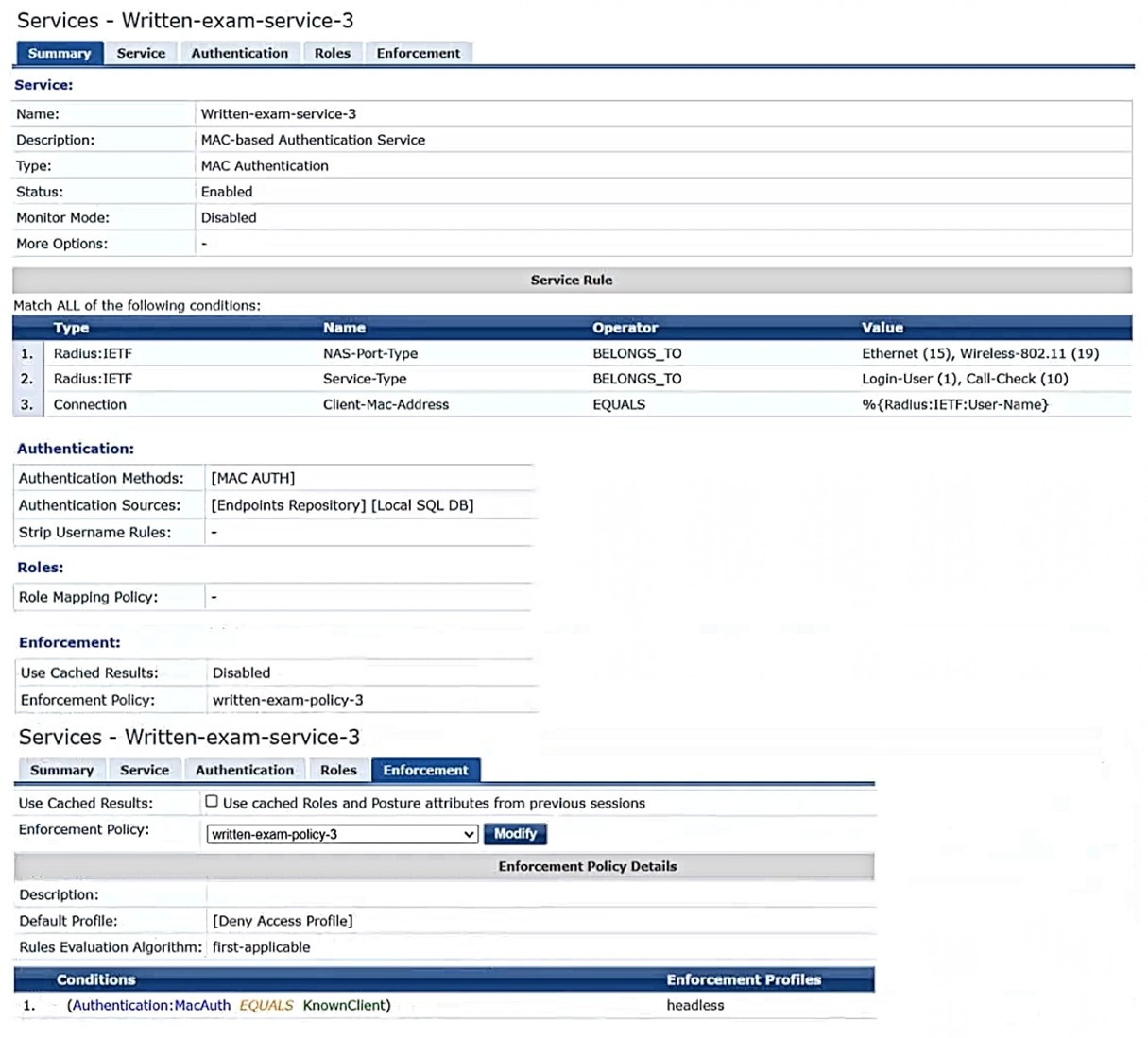
A customer wants CPPM to authenticate non-802.1X-capable devices. An admin has created the service shown in the exhibits below: What is one recommendation to improve security?
A. Adding an enforcement policy rule that denies access to endpoints with the Conflict flaq
B. Using Active Directory as the authentication source
C. Creating and using a custom MAC-Auth authentication method
D. Enabling caching of posture and roles
Questions 7
You are working with a developer to design a custom NAE script for a customer. The NAE agent should trigger an alert when ARP inspection drops packets on a VLAN. The customer wants the admins to be able to select the correct VLAN ID for the agent to monitor when they create the agent.
What should you tell the developer to do?
A. Use this variable, %{vlan-id} when defining the monitor URI in the NAE agent script.
B. Define a VLAN ID parameter; reference that parameter when defining the monitor URI.
C. Create multiple monitors within the script from which admins can select when they create the agent.
D. Use a callback action to collect the ID of the VLAN on which admins have enabled NAE monitoring.


Questions 8
A company has an Aruba ClearPass server at 10.47.47.8, FQDN radius.acnsxtest.local. This exhibit shows ClearPass Policy Manager's (CPPM's) settings for an Aruba Mobility Controller (MC).

The MC is already configured with RADIUS authentication settings for CPPM, and RADIUS requests between the MC and CPPM are working. A network admin enters and commits this command to enable dynamic authorization on the MC:
aaa rfc-3576-server 10.47.47.8
But when CPPM sends CoA requests to the MC, they are not working. This exhibit shows the RFC 3576 server statistics on the MC:

How could you fix this issue?
A. Change the UDP port in the MCs' RFC 3576 server config to 3799.
B. Enable RadSec on the MCs' RFC 3676 server config.
C. Configure the MC to obtain the time from a valid NTP server.
D. Make sure that CPPM is using an ArubaOS Wireless RADIUS CoA enforcement profile.
Questions 9
Refer to the exhibit.
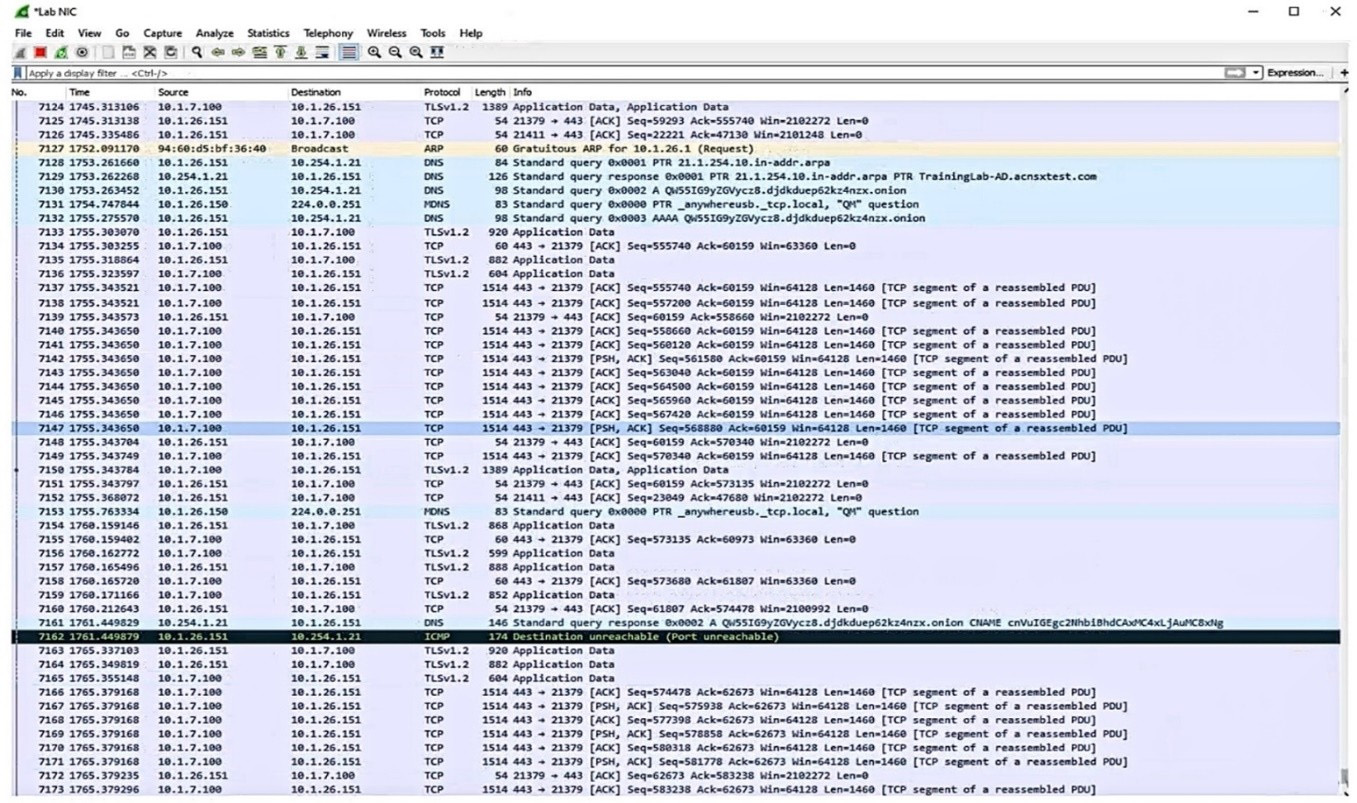
Which IP address should you record as a possibly compromised client?
A. 10.1.26.151
B. 10.1J.100
C. 10.1.26.1
D. 10.254.1.21
Questions 10
A company has Aruba gateways and wants to start implementing gateway IDS/IPS. The customer has selected Block for the Fail Strategy.
What might you recommend to help minimize unexpected outages caused by using this particular fall strategy?
A. Configuring a relatively high threshold for the gateway threat count alerts
B. Making sure that the gateways have formed a cluster and operate in default gateway mode
C. Setting the IDS or IPS policy to the least restrictive option, Lenient
D. Enabling alerts and email notifications for events related to gateway IPS engine utilization and errors
Questions 11
Refer to the scenario.
This customer is enforcing 802.1X on AOS-CX switches to Aruba ClearPass Policy Manager (CPPM). The customer wants switches to download role settings from CPPM. The "reception-domain" role must have these settings:
-- Assigns clients to VLAN 14 on switch 1, VLAN 24 on switch 2, and so on.
-- Filters client traffic as follows:
-- Clients are permitted full access to 10.1.5.0/24 and the Internet
-- Clients are denied access to 10.1.0.0/16 The switch topology is shown here:
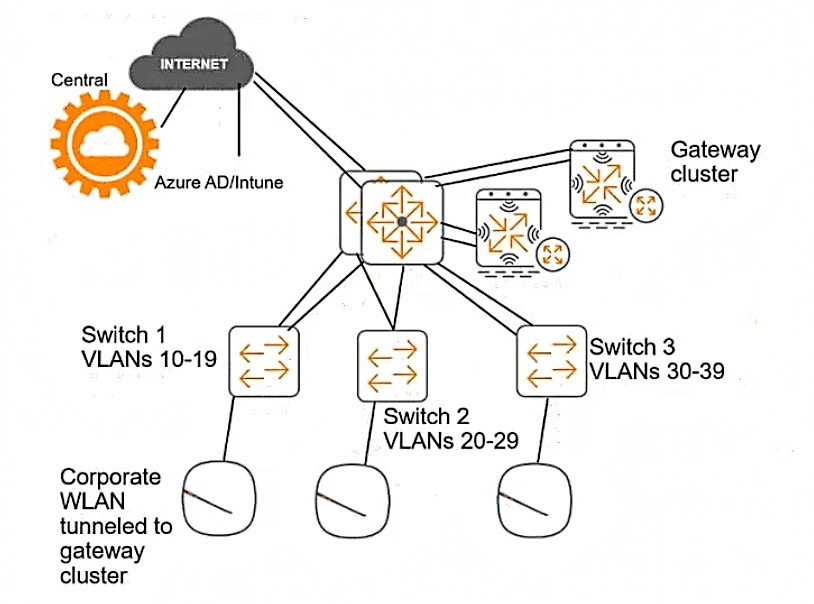
How should you configure the VLAN setting for the reception role?
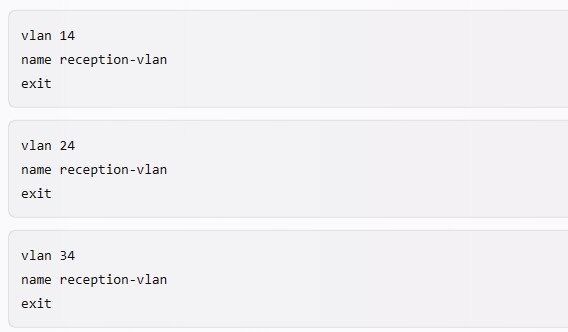
A. Assign a consistent name to VLAN 14, 24, or 34 on each access layer switch and reference that name in the enforcement profile VLAN settings.
B. Configure the enforcement profile as a downloadable role, but specify only the role name and leave the VLAN undefined. Then define a 'reception' role with the correct VLAN setting on each individual access layer switch.
C. Assign a number-based ID to the access layer switches. Then use this variable in the enforcement profile VLAN settings: %(NAS-ID]4.
D. Create a separate enforcement profile with a different VLAN ID for each switch. Add all profiles to the profile list in the appropriate enforcement policy rule.

Questions 12
Refer to the scenario.
A customer has an AOS10 architecture that is managed by Aruba Central. Aruba infrastructure devices authenticate clients to an Aruba ClearPass cluster.
In Aruba Central, you are examining network traffic flows on a wireless IoT device that is categorized as "Raspberry Pi" clients. You see SSH traffic. You then check several more wireless IoT clients and see that they are sending SSH also. You want a fast way to find a list of all the IoT clients that have used SSH.
What step can you take?
A. Create and apply a Central client profile tag that selects the SSH application and the clients' category.
B. Run a search for SSH traffic and loT client IDs in Aruba ClearPass Policy Manager's (CPPM's) accounting information.
C. Use Central's Live Events monitoring tool to detect which clients meet the desired criteria.
D. Use Central's Gateway IDS/IPS Security Dashboard to search for SSH events and sources.
Questions 13
A customer needs you to configure Aruba ClearPass Policy Manager (CPPM) to authenticate domain users on domain computers. Domain users, domain computers, and domain controllers receive certificates from a Windows CA. CPPM should validate these certificates and verify that the users and computers have accounts in Windows AD. The customer requires encryption for all communications between CPPM and the domain controllers.
You have imported the root certificate for the Windows CA to the ClearPass CA Trust list.
Which usages should you add to it based on these requirements?
A. Radec and Aruba infrastructure
B. EAP and AD/LDAP Server
C. EAP and Radsec
D. LDAP and Aruba infrastructure


Home | About Us | Contact Us | FAQ | Guarantee Policy | Privacy Policy
Any charges made through this site will appear as Global Simulators Limited. All trademarks are the property of their respective owners.
Copyright © 2004-2026 pass2lead.com, All Rights Reserved.