

MCPA-LEVEL1 Online Practice Questions and Answers
Questions 4
Traffic is routed through an API proxy to an API implementation. The API proxy is managed by API Manager and the API implementation is deployed to a CloudHub VPC using Runtime Manager. API policies have been applied to this API. In this deployment scenario, at what point are the API policies enforced on incoming API client requests?
A. At the API proxy
B. At the API implementation
C. At both the API proxy and the API implementation
D. At a MuleSoft-hosted load balancer
Questions 5
A System API is designed to retrieve data from a backend system that has scalability challenges. What API policy can best safeguard the backend system?
A. IPwhitelist
B. SLA-based rate limiting
C. Auth 2 token enforcement
D. Client ID enforcement
Questions 6
An organization is deploying their new implementation of the OrderStatus System API to multiple workers in CloudHub. This API fronts the organization's on-premises Order Management System, which is accessed by the API implementation over an IPsec tunnel.
What type of error typically does NOT result in a service outage of the OrderStatus System API?
A. A CloudHub worker fails with an out-of-memory exception
B. API Manager has an extended outage during the initial deployment of the API implementation
C. The AWS region goes offline with a major network failure to the relevant AWS data centers
D. The Order Management System is Inaccessible due to a network outage in the organization's on-premises data center
Questions 7
An API implementation is updated. When must the RAML definition of the API also be updated?
A. When the API implementation changes the structure of the request or response messages
B. When the API implementation changes from interacting with a legacy backend system deployed on-premises to a modern, cloud-based (SaaS) system
C. When the API implementation is migrated from an older to a newer version of the Mule runtime
D. When the API implementation is optimized to improve its average response time
Questions 8
An organization makes a strategic decision to move towards an IT operating model that emphasizes consumption of reusable IT assets using modern APIs (as defined by MuleSoft). What best describes each modern API in relation to this new IT operating model?
A. Each modern API has its own software development lifecycle, which reduces the need for documentation and automation
B. Each modem API must be treated like a product and designed for a particular target audience (for instance, mobile app developers)
C. Each modern API must be easy to consume, so should avoid complex authentication mechanisms such as SAML or JWT D
D. Each modern API must be REST and HTTP based

Questions 9
An API client calls one method from an existing API implementation. The API implementation is later updated. What change to the API implementation would require the API client's invocation logic to also be updated?
A. When the data type of the response is changed for the method called by the API client
B. When a new method is added to the resource used by the API client
C. When a new required field is added to the method called by the API client
D. When a child method is added to the method called by the API client
Questions 10
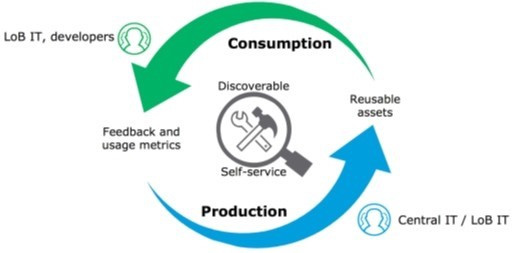
Which of the below, when used together, makes the IT Operational Model effective?
A. Create reusable assets, Do marketing on the created assets across organization, Arrange time to time LOB reviews to ensure assets are being consumed or not
B. Create reusable assets, Make them discoverable so that LOB teams can self-serve and browse the APIs, Get active feedback and usage metrics
C. Create resuable assets, make them discoverable so that LOB teams can self-serve and browse the APIs
Questions 11
The implementation of a Process API must change.
What is a valid approach that minimizes the impact of this change on API clients?
A. Update the RAML definition of the current Process API and notify API client developers by sending them links to the updated RAML definition
B. Postpone changes until API consumers acknowledge they are ready to migrate to a new Process API or API version
C. Implement required changes to the Process API implementation so that whenever possible, the Process API's RAML definition remains unchanged
D. Implement the Process API changes in a new API implementation, and have the old API implementation return an HTTP status code 301 - Moved Permanently to inform API clients they should be calling the new API implementation
Questions 12
Version 3.0.1 of a REST API implementation represents time values in PST time using ISO 8601 hh:mm:ss format. The API implementation needs to be changed to instead represent time values in CEST time using ISO 8601 hh:mm:ss format. When following the semver.org semantic versioning specification, what version should be assigned to the updated API implementation?
A. 3.0.2
B. 4.0.0
C. 3.1.0
D. 3.0.1
Questions 13
A retail company with thousands of stores has an API to receive data about purchases and insert it into a single database. Each individual store sends a batch of purchase data to the API about every 30 minutes. The API implementation uses a database bulk insert command to submit all the purchase data to a database using a custom JDBC driver provided by a data analytics solution provider. The API implementation is deployed to a single CloudHub worker. The JDBC driver processes the data into a set of several temporary disk files on the CloudHub worker, and then the data is sent to an analytics engine using a proprietary protocol. This process usually takes less than a few minutes. Sometimes a request fails. In this case, the logs show a message from the JDBC driver indicating an out-of-file-space message. When the request is resubmitted, it is successful. What is the best way to try to resolve this throughput issue?
A. se a CloudHub autoscaling policy to add CloudHub workers
B. Use a CloudHub autoscaling policy to increase the size of the CloudHub worker
C. Increase the size of the CloudHub worker(s)
D. Increase the number of CloudHub workers


Home | About Us | Contact Us | FAQ | Guarantee Policy | Privacy Policy
Any charges made through this site will appear as Global Simulators Limited. All trademarks are the property of their respective owners.
Copyright © 2004-2026 pass2lead.com, All Rights Reserved.