

NSE7_OTS-6.4 Online Practice Questions and Answers
Questions 4
Which three Fortinet products can be used for device identification in an OT industrial control system (ICS)? (Choose three.)
A. FortiNAC
B. FortiManager
C. FortiAnalyzer
D. FortiSIEM
E. FortiGate
Questions 5
Refer to the exhibit.
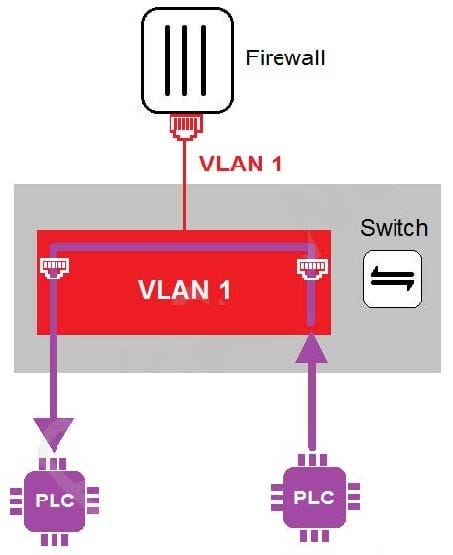
In the topology shown in the exhibit, both PLCs can communicate directly with each other, without going through the firewall.
Which statement about the topology is true?
A. PLCs use IEEE802.1Q protocol to communicate each other.
B. An administrator can create firewall policies in the switch to secure between PLCs.
C. This integration solution expands VLAN capabilities from Layer 2 to Layer 3.
D. There is no micro-segmentation in this topology.
Questions 6
Refer to the exhibit.
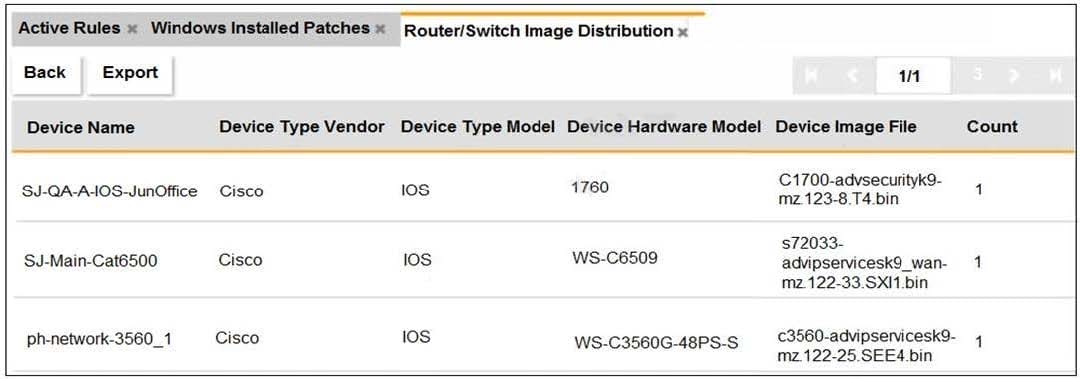
An OT administrator ran a report to identify device inventory in an OT network. Based on the report results, which report was run?
A. A FortiSIEM CMDB report
B. A FortiAnalyzer device report
C. A FortiSIEM incident report
D. A FortiSIEM analytics report
Questions 7
Refer to the exhibit.
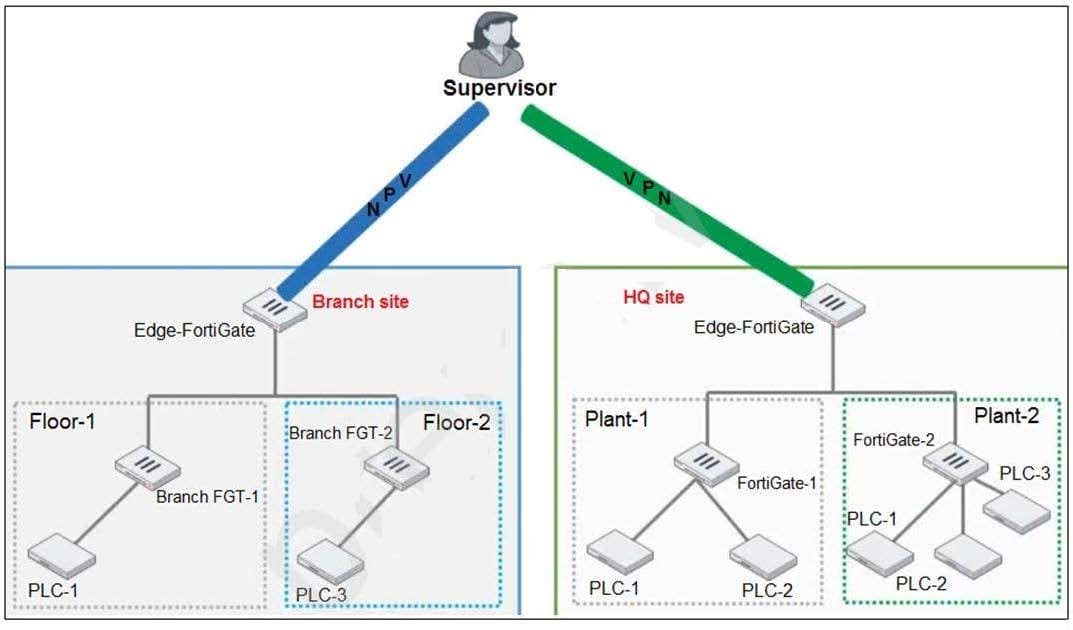
You need to configure VPN user access for supervisors at the breach and HQ sites using the same soft FortiToken. Each site has a FortiGate VPN gateway.
What must you do to achieve this objective?
A. You must use a FortiAuthenticator.
B. You must register the same FortiToken on more than one FortiGate.
C. You must use the user self-registration server.
D. You must use a third-party RADIUS OTP server.
Questions 8
An OT architect has deployed a Layer 2 switch in the OT network at Level 1 the Purdue model-process control. The purpose of the Layer 2 switch is to segment traffic between PLC1 and PLC2 with two VLANs. All the traffic between PLC1 and PLC2 must first flow through the Layer 2 switch and then through the FortiGate device in the Level 2 supervisory control network.
What statement about the traffic between PLC1 and PLC2 is true?
A. The Layer 2 switch rewrites VLAN tags before sending traffic to the FortiGate device.
B. The Layer 2 switches routes any traffic to the FortiGate device through an Ethernet link.
C. PLC1 and PLC2 traffic must flow through the Layer-2 switch trunk link to the FortiGate device.
D. In order to communicate, PLC1 must be in the same VLAN as PLC2.
Questions 9
Refer to the exhibit, which shows a non-protected OT environment.

An administrator needs to implement proper protection on the OT network.
Which three steps should an administrator take to protect the OT network? (Choose three.)
A. Deploy an edge FortiGate between the internet and an OT network as a one-arm sniffer.
B. Deploy a FortiGate device within each ICS network.
C. Configure firewall policies with web filter to protect the different ICS networks.
D. Configure firewall policies with industrial protocol sensors
E. Use segmentation
Questions 10
An administrator wants to use FortiSoC and SOAR features on a FortiAnalyzer device to detect and block any unauthorized access to FortiGate devices in an OT network.
Which two statements about FortiSoC and SOAR features on FortiAnalyzer are true? (Choose two.)
A. You must set correct operator in event handler to trigger an event.
B. You can automate SOC tasks through playbooks.
C. Each playbook can include multiple triggers.
D. You cannot use Windows and Linux hosts security events with FortiSoC.
Questions 11
When device profiling rules are enabled, which devices connected on the network are evaluated by the device profiling rules?
A. Known trusted devices, each time they change location
B. All connected devices, each time they connect
C. Rogue devices, only when they connect for the first time
D. Rogue devices, each time they connect
Questions 12
What two advantages does FortiNAC provide in the OT network? (Choose two.)
A. It can be used for IoT device detection.
B. It can be used for industrial intrusion detection and prevention.
C. It can be used for network micro-segmentation.
D. It can be used for device profiling.
Questions 13
An OT network architect must deploy a solution to protect fuel pumps in an industrial remote network. All the fuel pumps must be closely monitored from the corporate network for any temperature fluctuations.
How can the OT network architect achieve this goal?
A. Configure a fuel server on the remote network, and deploy a FortiSIEM with a single pattern temperature security rule on the corporate network.
B. Configure a fuel server on the corporate network, and deploy a FortiSIEM with a single pattern temperature performance rule on the remote network.
C. Configure a fuel server on the remote network, and deploy a FortiSIEM with a single pattern temperature performance rule on the corporate network.
D. Configure both fuel server and FortiSIEM with a single-pattern temperature performance rule on the corporate network.


Home | About Us | Contact Us | FAQ | Guarantee Policy | Privacy Policy
Any charges made through this site will appear as Global Simulators Limited. All trademarks are the property of their respective owners.
Copyright © 2004-2026 pass2lead.com, All Rights Reserved.