

QSDA2018 Online Practice Questions and Answers
Questions 4
Refer to the exhibit.
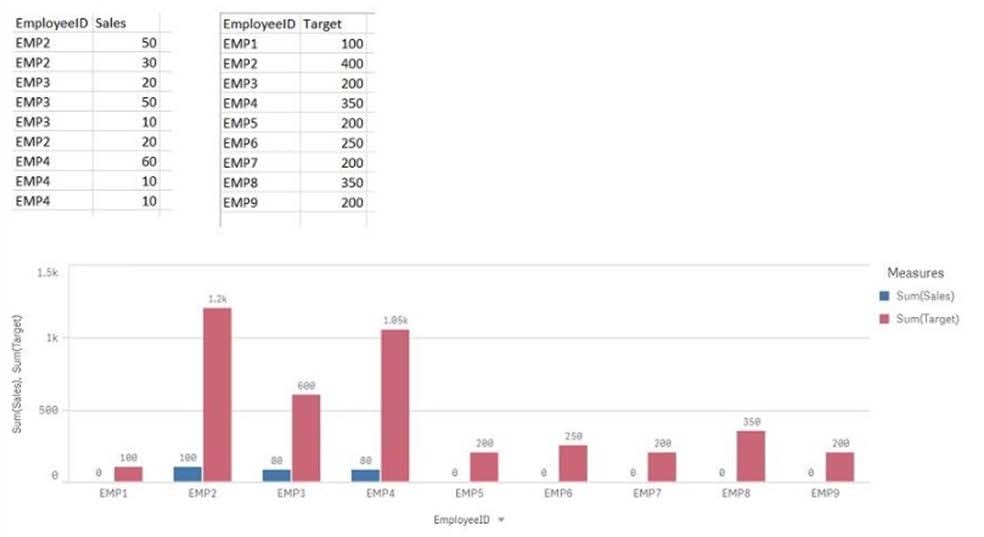
A data architect has two tables that contain Sales and target data for employees. The tables are loaded into Qlik Sense and are associated by EmployeeID. The data architect creates a bar chart of total Sales vs. Target. The architect notices some values for target are too high, and employees with NO sales should be excluded.
Which function should the data architect use to resolve these issues?
A. Left Join
B. Inner Join
C. Left Keep
D. Outer Join
Questions 5
Payroll managers need access to the payroll system to complete a quarterly report. A username and password is required to access the payroll system through an ODBC connection. Only the system administrator should have access to the credentials and make updates as needed. Each payroll manager who access the app should only see their own employees.
Which two actions are required to set up the appropriate security? (Choose two.)
A. Make sure that the administrator creates appropriate sync rules to access the payroll system
B. Apply the correct section access to restrict data visibility
C. Make sure that the administrator applies security rules to the correct stream to restrict data visibility
D. Apply security rules to the app to restrict data visibility
E. Make sure that the administrator applies the correct security rules to the ODBC connection
Questions 6
Refer to the exhibit.
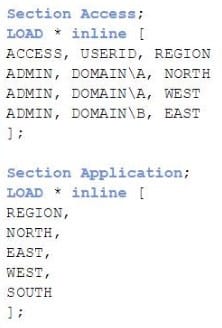
How should the account that runs the Qlik Sense Services be configured in the Section Access table?
A. ADMIN, QLIK_SERVICES,
B. ADMIN, DOMAIN/QLIK_SERVICES,
C. ADMIN, QLIK_SERVICES,*
D. ADMIN, DOMAIN\QLIK_SERVICES,*
Questions 7
Stocks levels are stored online in a system that keeps information for the current period only.
What should the data architect do to enable analysis of the trends of the stock levels?
A. Use On-Demand App Generation (ODAG) to create new apps from the selected period
B. Capture the periodic information in an incremental QVD file for use in an app
C. Create an app for each period as it changes and use document chaining
D. Create an app for each period and use a binary load task to create a single app
Questions 8
Refer to the exhibit.
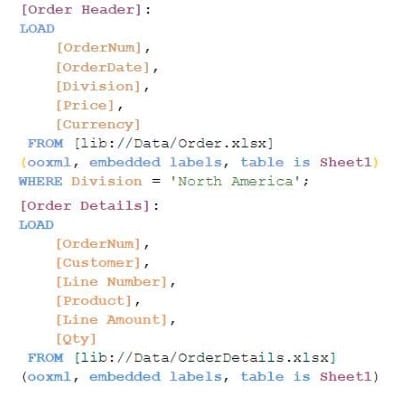
A data architect loads order data for a global sales organization. The Order Details contains 100 million rows. The data architect must load only the data for the North America division.
Which WHERE clause should the data architect use in the Order Details LOAD script?
A. WHERE Division = `North America";
B. WHERE Exists(OrderNum);
C. WHERE OrderNum = [Order Header].[OrderNum];
D. WHERE Exists(`North America');
Questions 9
Refer to the exhibits.

A data architect must load the two tables without creating a synthetic key. The data architect also must make sure expressions like Sum ([Budgeted Sales]) are calculated correctly.
Which load script meets these requirements?

A.

B. C.

D.
Questions 10
Refer to the exhibit.
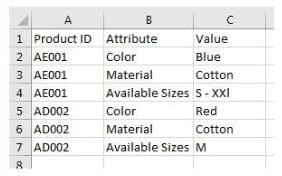
A fashion retail company needs to analyze data product inventory. The company needs to filter by attributes by such as color, material, and size.
Which strategy should a data architect use to meet these requirements?
A. Turn data rows into fields by using a generic load
B. Use the hierarchy load statement to expand hierarchy levels
C. Use crosstable in the load statement to unpivot
D. Loop through the table to transpose fields
Questions 11
Refer the exhibit.

A new app is being developed. Users need to see:
Total sales for each customer
Total sales for given state
Customers that have not had any sales
Names of salesperson and regional manager
Total number of sales by date
The data architect constructs several data models and tests the validity of each model.
Which two data models meet these requirements? (Choose two.)

A.
The data architect aliases the MrgID field to RegionalAcctMgrID and the CustID field in the Customers table.

B.
The data architect loads two copies of the Employees table, aliases the appropriate fields, and aliases the CustID field when loading the Customers table.

C.
The data architect performs two Left Joins to the Sales table to get the Employee names and loads the Customers table aliasing the CustID field.

D.
The data architect performs three Left Joins to load the Customer and Employee data fields into the Sales table.
Questions 12
Refer to the exhibit.
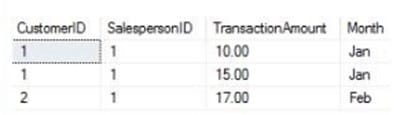
An organization stores sales data in SQL Server. A database administrator creates a view to show the transaction data. The data architect must:
Create a data model that shows the total sales for each salesperson by month
Create an indicator that shows whether the total monthly sales meet or exceed the monthly quota, which is always $1,200
Which script should the data architect use to meet these requirements?
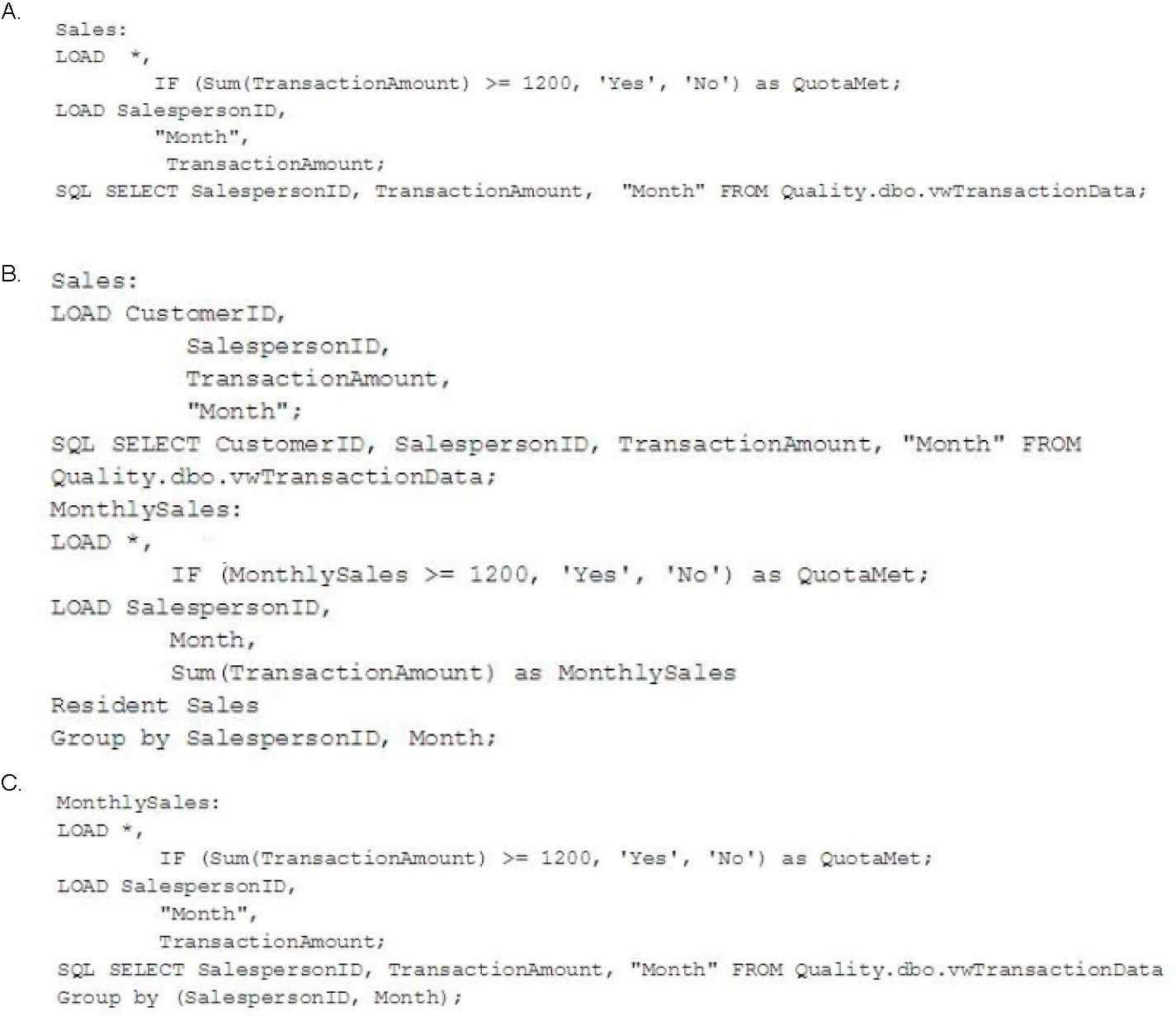
A. B. C.
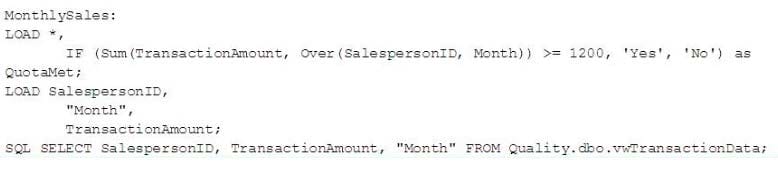
D.
Questions 13
Refer to the exhibit.
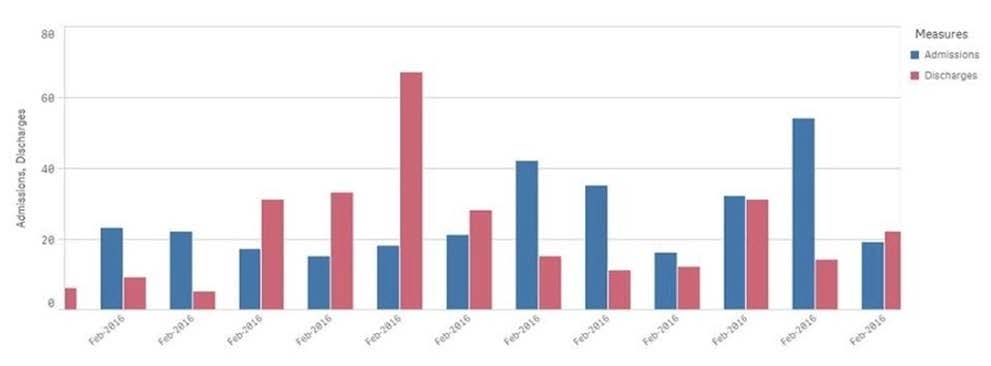
A chart for monthly hospital admissions and discharges incorrectly displays the month and year values on the x-axis. The date format for the source data field "Common date" is M/D/YYYY. This format was used in a calculated field named "Month-Year" in the data manager when the data model was first built.
Which expression should the data architect use to fix this issue?
A. Date (MonthsStart ([Common Date]), `MMM-YYY')
B. Date (MonthStart ([Common Date]), `MMM-YYY')
C. Date ([Common Date], `MMM-YYY')
D. Date (InMonth([Common Date]), MMM-YYYY')


Home | About Us | Contact Us | FAQ | Guarantee Policy | Privacy Policy
Any charges made through this site will appear as Global Simulators Limited. All trademarks are the property of their respective owners.
Copyright © 2004-2026 pass2lead.com, All Rights Reserved.