


 Printable PDF

Oracle Risk Management Cloud 2019 Implementation Essentials: 1Z0-1058
Want to pass your Oracle Risk Management Cloud 2019 Implementation Essentials 1Z0-1058 exam in the very first attempt? Try Pass2lead! It is equally effective for both starters and IT professionals.
- Vendor: Oracle
- Exam Code: 1Z0-1058
- Exam Name: Oracle Risk Management Cloud 2019 Implementation Essentials
- Certifications: Oracle Certifications
- Total Questions: 75 Q&As( View Details)
- Updated on: Jul 08, 2026
- Note: Product instant download. Please sign in and click My account to download your product.



- Q&As Identical to the VCE Product
- Windows, Mac, Linux, Mobile Phone
- Printable PDF without Watermark
- Instant Download Access
- Download Free PDF Demo
- Includes 365 Days of Free Updates
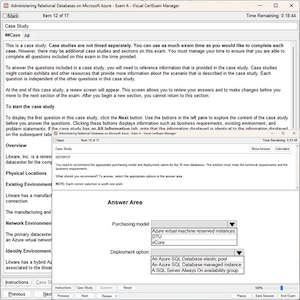
VCE
- Q&As Identical to the PDF Product
- Windows Only
- Simulates a Real Exam Environment
- Review Test History and Performance
- Instant Download Access
- Includes 365 Days of Free Updates
Passing Certification Exams Made Easy
Everything you need prepare and quickly pass the tough certification exams the first time
- 99.5% pass rate
- 7 Years experience
- 7000+ IT Exam Q&As
- 70000+ satisfied customers
- 365 days Free Update
- 3 days of preparation before your test
- 100% Safe shopping experience
- 24/7 Support
Oracle 1Z0-1058 Last Month Results
Free 1Z0-1058 Exam Questions in PDF Format
Related Oracle Certifications Exams
1Z0-1058 Online Practice Questions and Answers
Questions 1
Which filter can be used to identify expense reports that contain suspicious expense type combinations, such as, a report for a single trip that contains taxi, car rental, and mileage expenses?
A. Inclusive function filter grouped by the "Expense Report Information" object's "Report Number" where the "Expense Type" has an "Equals" condition for values that include taxi, car, mileage.
B. Inclusive function filter grouped by the "Expense Report Information" object's "Report Number" where the "Expense Type" has an "In" condition for values that include taxi, car, mileage.
C. Inclusive function filter grouped by the "Expense Report Information" object's "Person" where the "Expense Type" has an "In" condition for values that include taxi, car, mileage.
D. Inclusive function filter grouped by the "Expense Report Information" object's "Report Number" where the "Expense Type" has an "In" condition for values that include taxi, car, mileage.
E. Inclusive function filter grouped by the "Expense Report Information" object's "Person" where the "Expense Type" has an "In" condition for values that include taxi, car, mileage.
Questions 2
Which three statements are true about the purpose of perspectives? (Choose three.)
A. Perspectives can be used to define user privileges.
B. Perspectives can be used for categorizing Financial Reporting Compliance objects.
C. Perspectives can be used to represent regional hierarchies.
D. Perspectives are used to enable data security on Financial Reporting Compliance objects.
E. Perspectives enable functional security in Financial Reporting Compliance.
Questions 3
Your client has asked you to define a transaction model to identify duplicate invoices based on Invoice
Numbers and Invoice Amounts.
Which two standard filters can be combined to accomplish this? (Choose two.)
A. The "Payables Invoice" object's "Supplier ID" does not equal itself.
B. The "Payables Invoice" object's "Invoice ID" is similar to the "Payables Invoice" object's "Invoice Number".
C. The "Payables Invoice" object's "Invoice Amount" is equal to itself.
D. The "Payables Invoice" object's "Invoice Number" is equal to the "Payables Invoice" object's "Invoice ID."
E. The "Payables Invoice" object's "Invoice Number" is equal to itself.
Reviews
-
Kim
 CambodiaI appreciated this dumps not only because it helped me pass the exam, but also because I learned much knowledge and skills. Thanks very much.
 -
zzz
 United Statesi must recommend this dumps to you for i achieved full score with the help of it. i believe that you can do it like me by using this dumps.
 -
ZHLEE
 MalaysiaI want to say thank you to you guys. This is the first time I buy dumps from you while I think I will be a regular customer.
 -
Cadman
 GreeceI'm feeling luck because there are no new questions! All the questions are form this dumps!!! Thanks for your help! Thank you all !!!
 -
Rossie
 Russian Federationvery good study material.
 -
Quennell
 EgyptThe new questions in the exam are not the new questions for me because I have met them when I used this material . So there is no doubt that I have passed the exam with high score. Recommend this material strongly.
 -
Lloyd
 Pakistanthis dumps is valid. All questions that I met in the exam are from this dumps !!!
 -
Nick
 PortugalPassed with unexpected score. A big surprise. Thanks very much.
 -
Rock
 Ghanatook the exams yesterday and scored 9xx.dumps are valid. almost all of the multiple choice came out. I advice know ur material very well and then U can read dumps. good success
 -
_q_
United StatesDo not reply on a dumps to pass the exam.
Utilize GNS3 or real equipment to learn the technology.
Please do not degrade the value of this Cisco Cert.



Home | About Us | Contact Us | FAQ | Guarantee Policy | Privacy Policy
Any charges made through this site will appear as Global Simulators Limited. All trademarks are the property of their respective owners.
Copyright © 2004-2026 pass2lead.com, All Rights Reserved.