

USMLE-STEP-3 Online Practice Questions and Answers
Questions 4
A54-year-old Asian female with no significant medical history presents with frontal headache, eye pain, nausea, and vomiting. Her abdominal examination shows mild diffuse tenderness but no rebound or guarding. Her mucous membranes are dry. Her vision is blurry in both eyes, her eyes are injected but her extraocular muscles are intact. Her pupils are mid-dilated and fixed
Which of the following is the most likely diagnosis?
A. diabetic ketoacidosis (DKA)
B. appendicitis
C. angle closure glaucoma
D. perforated colon due to inflammatory bowel disease (IBD)
E. cerebellar malignancy
Questions 5
A23-year-old presents with the history of a suspected spider bite to the left groin. On questioning, no one saw a spider. The patient has been healthy except occasional boils under his arms and in the groin. The patient is afebrile. No family members are sick.
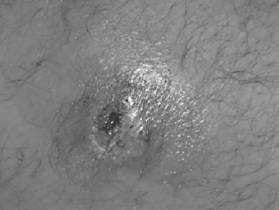
Appropriate treatment would include which of the following?
A. Benadryl and topical steroids
B. surgical debridement
C. incision and drainage
D. treatment with TMP-SMZ
E. observation and instructions to the patient to pop any pustules to help it drain
Questions 6
A 55-year-old woman presents to your office with painful hands, causing difficulty opening jars and turning the key in the ignition of her car. She is fatigued and she notices joint stiffness, but limbers up by lunch. She has trouble getting her rings off because of enlarging knuckles. About a year ago, she tried some OTC ibuprofen, which seemed to help, but led to the development of a bleeding ulcer severe enough to require transfusion and ICU care. Otherwise, her health is good, and her review of systems is negative. Your physical examination reveals tenderness and swelling at the index proximal interphalangeal and metacarpophalangeal joints bilaterally. There are small effusions on both knees. She has tenderness to lateral compression of the forefoot area bilaterally.
The test ordered above is negative and an anticyclic citrullinated peptide (anti-CCP) antibody is strongly positive (600). Which of the following is the probable source of her symptoms?
A. cryoglobulinemia
B. osteoarthritis
C. polymyalgia rheumatica
D. SLE
E. RA
Questions 7
The most common cause of surgery in a patient with Crohn's disease is which of the following?
A. carcinoma
B. fistula
C. bleeding
D. obstruction
E. abscess
Questions 8
A40-year-old woman presents with epigastric pain and is diagnosed with peptic-ulcer disease. A duodenal ulcer is seen on upper endoscopy.
How would you counsel her regarding surgical management options?
A. The ulcer is most likely secondary to a malignancy. Further workup is needed to rule out distant metastases before considering surgery.
B. Surgery is the most effective first-line therapy.
C. Recurrence rate of a duodenal ulcer 15 years after vagotomy and a drainage procedure is less than 5% .
D. Patients operated on for intractability are more prone to developing postgastrectomy symptoms.
E. Incidence of dumping syndrome is lower after highly selective vagotomy than after truncal vagotomy.
Questions 9
Several days following an uneventful laparoscopic cholecystectomy, the pathology report reveals gallbladder cancer that is invasive into the submucosa of the specimen. The most appropriate management is which of the following?
A. observation and close follow-up
B. chemotherapy with a 5-fluorouracil (5-FU)-based regimen
C. laparotomy with 23 cm wedge resection of the gallbladder liver bed
D. laparotomy with 23 cm wedge resection of the gallbladder liver bed and regional lymphadenectomy including the portal and hepatic nodal basins
E. radiation to the gallbladder liver bed
Questions 10
You are called to see a newborn in the nursery because the nurse is concerned that the baby may have
Down syndrome.
The infant begins to have progressively large amounts of bilious emesis. The infant feeds well and has only
a small amount of abdominal distention.
What is the most likely diagnosis?
A. pyloric stenosis
B. Hirschsprung disease
C. biliary atresia
D. duodenal atresia
E. milk protein allergy
Questions 11
A patient with a persistent headache following a postpartum hemorrhage is diagnosed with Sheehan's syndrome. If the patient were subsequently amenorrheic and infertile, what treatment would you recommend to assist this patient to conceive?
A. gonadotropin releasing hormone (GnRH) pump
B. clomiphene citrate
C. dopamine agonist
D. in vitro fertilization
E. gonadotropins (FSH and LH)
Questions 12
A 30-year-old (G2P0101) female presents to the clinic for a new obstetric visit. She has an unknown LMP. She reports that she discovered she was pregnant when she took a urine pregnancy test at home a month ago. She vaguely recalls having a period about 2 months ago, but is not sure exactly when that occurred. She reports that she is generally healthy. She had a previous delivery at 36 weeks EGA, though she reports her doctor was not really sure about her due date in that pregnancy. She reports that she had a normal spontaneous vaginal delivery in her previous pregnancy, and the child is healthy. Her postpartum course was complicated by depression, which has since resolved and not recurred. She denies history of sexually transmitted diseases or abnormal pap smears. She has no surgical history. She does not smoke, drink alcohol, or use illicit drugs. She does not have any family history of hypertension, diabetes, twins, or congenital anomalies. She does report that her mother has a history of depression.
Which of the following tests will provide the most useful information to determine this patient's EDD?
A. pelvic examination
B. serum FSH and LH
C. serum quantitative -hCG level
D. measurement of fundal height
E. pelvic ultrasound
Questions 13
The patient is a 52-year-old male presenting to the emergency room with complaints of severe leg pain. The patient states he has had ongoing left knee pain of 6 months' duration, unrelieved by NSAIDs but improved with vicodin. He denies any trauma but claims to have arthritis. His vital signs are stable. Physical examination of his knee demonstrates no significant findings except for decreased range of motion but with little effort. There is no swelling, erythema, or signs of trauma. An x-ray is obtained which is read as "normal," without evidence of arthritis. He asks for narcotic analgesics, but when he is offered a trial of NSAIDs and a referral to a specialty clinic, he becomes angry and walks out of the emergency room. Which of the following would be the most appropriate management should this patient return?
A. accusation regarding drug-seeking behavior
B. admission to a psychiatric facility
C. confrontation and further evaluation
D. notification of the police
E. referral to a psychiatrist


Home | About Us | Contact Us | FAQ | Guarantee Policy | Privacy Policy
Any charges made through this site will appear as Global Simulators Limited. All trademarks are the property of their respective owners.
Copyright © 2004-2026 pass2lead.com, All Rights Reserved.