

 Printable PDF

Certified Wireless Network Administrator (CWNA): PW0-105
Want to pass your Certified Wireless Network Administrator (CWNA) PW0-105 exam in the very first attempt? Try Pass2lead! It is equally effective for both starters and IT professionals.
- Vendor: CWNP
- Exam Code: PW0-105
- Exam Name: Certified Wireless Network Administrator (CWNA)
- Certifications: CWNP Certifications
- Total Questions: 125 Q&As
- Updated on: Jul 06, 2026
- Note: Product instant download. Please sign in and click My account to download your product.



- Q&As Identical to the VCE Product
- Windows, Mac, Linux, Mobile Phone
- Printable PDF without Watermark
- Instant Download Access
- Download Free PDF Demo
- Includes 365 Days of Free Updates
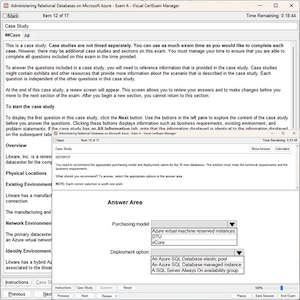
VCE
- Q&As Identical to the PDF Product
- Windows Only
- Simulates a Real Exam Environment
- Review Test History and Performance
- Instant Download Access
- Includes 365 Days of Free Updates
Passing Certification Exams Made Easy
Everything you need prepare and quickly pass the tough certification exams the first time
- 99.5% pass rate
- 7 Years experience
- 7000+ IT Exam Q&As
- 70000+ satisfied customers
- 365 days Free Update
- 3 days of preparation before your test
- 100% Safe shopping experience
- 24/7 Support
CWNP PW0-105 Last Month Results
Free PW0-105 Exam Questions in PDF Format
Related CWNP Certifications Exams
PW0-105 Online Practice Questions and Answers
Questions 1
Given: The network administrator at XYZ Company recently attended a training class on wireless security and realized that he should update the corporate security policy to address WLAN technology. The network administrator is listing the items that should be addressed in the security policy update, and has asked for your input.
What WLAN topics should be addressed by a company security policy? (Choose 4)
A. Theft prevention and data security of WLAN infrastructure devices
B. Wireless intrusion monitoring and response procedures
C. WLAN performance analysis baseline documentation
D. Password requirements for users and infrastructure equipment
E. Training of the IT staff on WLAN operational security
F. User density planning and AP client association thresholds
Questions 2
What statement about 802.11 WLAN performance is true?
A. Use of larger frame sizes results in greater throughput in low interference environments.
B. BSS support for 65 KB A-MPDUs will increase the maximum data rate available to client devices.
C. In 802.11n, changing the security mechanism from WPA2-Personal to WPA2-Enterprise will enable the HT MCS rates.
D. Compared to an Independent BSS, an Infrastructure BSS can provide almost twice the throughput between wireless nodes.
E. Use of short guard intervals improves reliability and throughput in high multipath environments
Questions 3
What statements about the beamwidth of an RF antenna are true? (Choose two)
A. The lower the gain of an antenna, the more narrow one or both beamwidths become.
B. The beamwidth patterns on an antenna polar chart indicate the point at which the RF signal stops propagating.
C. Horizontal and vertical beamwidth are calculated at the points in which the main lobe decreases power by 3 dB.
D. Horizontal beamwidth is displayed (in degrees) on the antenna's Azimuth Chart.
E. Antenna beamwidth is measured in units of decibels relative to an isotropic radiator (dBi).
Reviews
-
Mike
 United Statestook the exam yday.passed with almost full mark.Dump is very valid.
 -
Andy
 United KingdomNow, i have finished my exam. I really appreciate for the help of this dumps. Thanks very much.
 -
Branden
 Sri LankaI passed. Good luck to you.
 -
Mickey
 South AfricaA very good study material, i just used one month and i passed the exam yesterday. So you can trust on it.
 -
William
 CambodiaYes, i have passed the exam by using this dumps,so you also can try it and you will have unexpected achievements. Recommend to all.
 -
Zia
United StatesAnswers are correct. Questions are valid.Recommend strongly. -
zia
 PakistanI took my exam yesterday and passed. Questions are valid. Customer support was great. Thanks for your help.
 -
Roger
United StatesAs for me , this dumps is very useful and convenient, I can find my disadvantages easily and know how to correct them. I also can learn new skills and knowledge by using this dumps. I think you also can do it. I have test it so you can trust on it. -
Rada
 South KoreaThis dumps is enough to pass exam.There are many new questions and some modified questions.Good luck to you all.
 -
Zy
 SingaporeAt first, i don’t think i can pass the exam. But when i used this dumps, i felt more confident to pass the exam. It is not out of my expectation, i passed the exam with the full score because I met many same question that i have done in this dumps. Thanks this dumps, it is useful.



Home | About Us | Contact Us | FAQ | Guarantee Policy | Privacy Policy
Any charges made through this site will appear as Global Simulators Limited. All trademarks are the property of their respective owners.
Copyright © 2004-2026 pass2lead.com, All Rights Reserved.