


 Printable PDF

Implementing Aruba Campus Switching solutions: HPE6-A45
Want to pass your Implementing Aruba Campus Switching solutions HPE6-A45 exam in the very first attempt? Try Pass2lead! It is equally effective for both starters and IT professionals.
- Vendor: HP
- Exam Code: HPE6-A45
- Exam Name: Implementing Aruba Campus Switching solutions
- Certifications: HP Certifications
- Total Questions: 168 Q&As( View Details)
- Updated on: Jul 04, 2026
- Note: Product instant download. Please sign in and click My account to download your product.




- Q&As Identical to the VCE Product
- Windows, Mac, Linux, Mobile Phone
- Printable PDF without Watermark
- Instant Download Access
- Download Free PDF Demo
- Includes 365 Days of Free Updates
VCE
- Q&As Identical to the PDF Product
- Windows Only
- Simulates a Real Exam Environment
- Review Test History and Performance
- Instant Download Access
- Includes 365 Days of Free Updates
Passing Certification Exams Made Easy
Everything you need prepare and quickly pass the tough certification exams the first time
- 99.5% pass rate
- 7 Years experience
- 7000+ IT Exam Q&As
- 70000+ satisfied customers
- 365 days Free Update
- 3 days of preparation before your test
- 100% Safe shopping experience
- 24/7 Support
HP HPE6-A45 Last Month Results
Free HPE6-A45 Exam Questions in PDF Format
Related HP Certifications Exams
HPE6-A45 Online Practice Questions and Answers
Questions 1
Refer to the exhibits. Exhibit 1
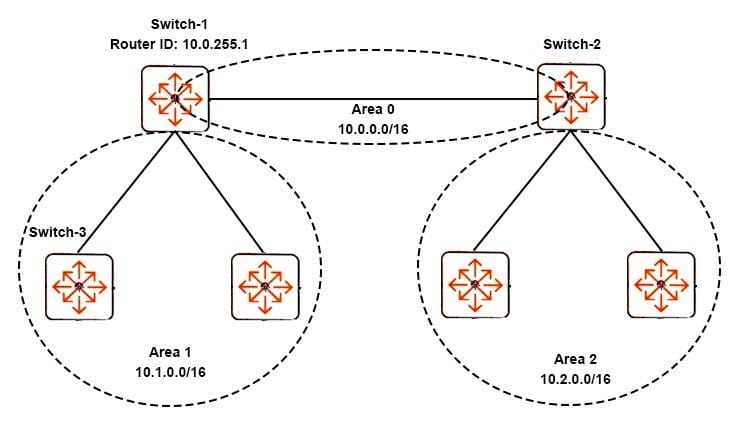
Exhibit 2
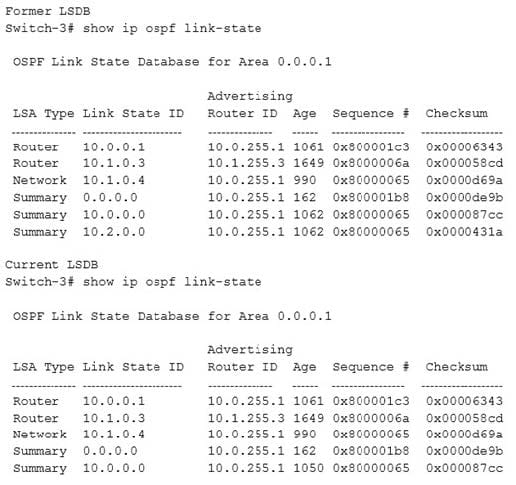
A network administrator needs to understand why endpoints that use Switch-3 as their default router can no longer reach some resources. The exhibit shows the OSPF link state database (LSDB) on Switch-1 when the OSPF solution was first deployed and the current LSDB.
What is a likely place to find the issue?
A. in the connectivity status between Switch-3 and Switch-1
B. in the connectivity status between Switch-1 and Switch-2
C. in the Switch-1 OSPF Area 1 configuration settings
D. in the Switch-3 OSPF Area 1 configuration settings
Questions 2
Refer to the exhibit.
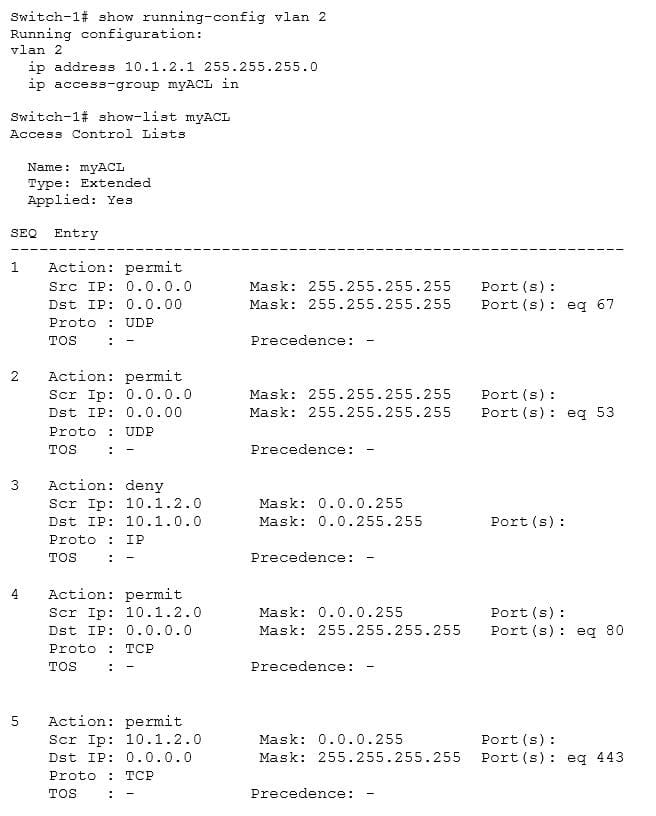
A network administrator needs to alter myACL so that it permits all traffic that arrives in VLAN 2 and is destined to 10.1.10.0/24. Besides this change, the ACL must continue to act as it does now. The administrator plans this new rule:
permit ip any 10.1.10.0/24
A. Apply the new rule without a rule ID to ensure that the switch applies the automatic processing order to it.
B. Resequence the ACL with more space, then add the new rule with a sequence ID before the ID for the current third rule.
C. Remove the ACL from the VLAN and re-apply it as an inbound VLAN ACL (VACL). Then, add the new rule with any ID higher than 2.
D. Enable ACL grouping on the switch. Add the new rule in anew ACL. Then, group the new ACL with myACL.
Questions 3
Refer to the exhibit.
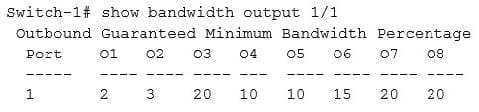
Network administrators need to determine if the QoS settings on their AOS-Switches still meet their needs. Interface 1 is a 1 Gbps interface. Assume that the interface needs to forward this amount of traffic during a time of congestion: Traffic with default 802.1p value = 600 Mbps Traffic with the 802.1p value 7 = 600 Mbps
Given the exhibit, how much bandwidth is available for the default traffic?
A. 20 Mbps
B. 200 Mbps
C. 400 Mbps
D. 500 Mbps
Reviews
-
Perry
 ChinaHello, guys. i have passed the exam successfully in the morning,thanks you very much.
 -
Younan
 SwitzerlandPassed this exam with a score of 941.Most of them are in this dumps.
 -
Zhao
 United Arab EmiratesJust passed my exam. 4 new questions in my exam. You need to be careful. Do not just learn the answers by heart. Better to get understanding about why the correct answer is this one not that one. Recommend.
 -
Walls
 EgyptI love this dumps. It really helpful and convenient. Recommend strongly.
 -
Alex
 United StatesThis is latest Dumps and all the answers are accurate. You can trust on this. Recommend.
 -
Donn
United StatesThis dumps is still very valid, I have cleared the written exams passed today. Recommend. -
Dale
United StatesThanks for your help I pass my exam yesterday. Although I did not get a very high score but never mind. Thanks. -
Osman
 FranceI have tested yet. I prepared my exam only with their materials. Recommend.
 -
zorro
EgyptPassed my exam today. Great job.Thanks this dumps. -
BAHMAN
 TurkeyAbout 3 questions are different, but the remaining is ok for pass. I passed successfully.



Home | About Us | Contact Us | FAQ | Guarantee Policy | Privacy Policy
Any charges made through this site will appear as Global Simulators Limited. All trademarks are the property of their respective owners.
Copyright © 2004-2026 pass2lead.com, All Rights Reserved.