

 Printable PDF

Salesforce Certified Platform Integration Architect (Plat-Arch-204): INTEGRATION-ARCHITECT
Want to pass your Salesforce Certified Platform Integration Architect (Plat-Arch-204) INTEGRATION-ARCHITECT exam in the very first attempt? Try Pass2lead! It is equally effective for both starters and IT professionals.
- Vendor: Salesforce
- Exam Code: INTEGRATION-ARCHITECT
- Exam Name: Salesforce Certified Platform Integration Architect (Plat-Arch-204)
- Certifications: Salesforce Certifications
- Total Questions: 149 Q&As( View Details)
- Updated on: Jul 04, 2026
- Note: Product instant download. Please sign in and click My account to download your product.



- Q&As Identical to the VCE Product
- Windows, Mac, Linux, Mobile Phone
- Printable PDF without Watermark
- Instant Download Access
- Download Free PDF Demo
- Includes 365 Days of Free Updates
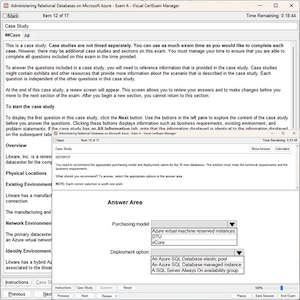
VCE
- Q&As Identical to the PDF Product
- Windows Only
- Simulates a Real Exam Environment
- Review Test History and Performance
- Instant Download Access
- Includes 365 Days of Free Updates
Passing Certification Exams Made Easy
Everything you need prepare and quickly pass the tough certification exams the first time
- 99.5% pass rate
- 7 Years experience
- 7000+ IT Exam Q&As
- 70000+ satisfied customers
- 365 days Free Update
- 3 days of preparation before your test
- 100% Safe shopping experience
- 24/7 Support
Salesforce INTEGRATION-ARCHITECT Last Month Results
Free INTEGRATION-ARCHITECT Exam Questions in PDF Format
Related Salesforce Certifications Exams
INTEGRATION-ARCHITECT Online Practice Questions and Answers
Questions 1
An Integration Developer is developing an HR synchronization app for a client. The app synchronizes Salesforce record data changes with an HR system that's external to Salesforce. What should the integration architect recommend to ensure notifications are stored for up to three days if data replication fails?
A. Change Data Capture
B. Generic Events
C. Platform Events
D. Callouts
Questions 2
Universal Containers (UC) currently owns a middleware tool and they have developed an API-led integration architecture with three API tiers. The first tier interfaces directly with the systems of engagement, the second tier implements
business logic and aggregates data, while the third tier interfaces directly with systems of record. Some of the systems of engagement will be a mobile application, a web application, and Salesforce.
UC has a business requirement to return data to the systems of engagement in different formats while also enforcing different security protocols.
What should an Integration Architect recommend to meet these requirements?
A. Enforce separate security protocols and return formats at the first tier of the API-led architecture.
B. Implement an API gateway that all systems of engagement must interface with first.
C. Enforce separate security protocols and return formats at the second tier of the API-led architecture.
D. Leverage an Identity Provider solution that communicates with the API tiers via SAML
Questions 3
Acompany's security assessment noted vulnerabilities on the un managed packages in their Salesforce orgs, notably secrets that are easily accessible and in plain text, such as usernames, passwords, and OAuth tokens used in callouts from Salesforce.
Which two persistence mechanisms should an integration architect require to be used to ensure that secrets are protected from deliberate or inadvertent exposure? Choose 2 answers
A. Encrypted Custom Fields
B. Named Credentials
C. Protected Custom Metadata Types
D. Protected Custom Settings
Reviews
-
Lisy
 Thailandtoday i'm pass the exam with high score. believe on it.
 -
This dumps is valid. I just pass the exam with it. The answers are accurate.Recommend.
-
Got 950 pass monday, almost all questions from this dumps.. So its VALID!!
-
Obed
 EgyptNice study material, I passed the exam with the help of it. Recommend strongly.
 -
William
 CambodiaYes, i have passed the exam by using this dumps,so you also can try it and you will have unexpected achievements. Recommend to all.
 -
Luka
 United StatesMy good friend introduced this material to me. It really useful and convenient. I just prepared the exam by using this material and achieved high score than others. So I'm very happy. Thanks my friend and this material.
 -
Uber
 United KingdomI pass my exam with a pretty score. The dumps are good and all the answers are correct. If you want to pass , you can use this dumps.
 -
Roger
United StatesAs for me , this dumps is very useful and convenient, I can find my disadvantages easily and know how to correct them. I also can learn new skills and knowledge by using this dumps. I think you also can do it. I have test it so you can trust on it. -
zuher
 Indiathanks for the advice. I passed my exam today! All the questions are from your dumps. Great job.
 -
Lloyd
United StatesThis dumps is useful and helpful, I also introduced it to my good friend. Now, we passed the exam together. Thanks for this dumps.



Home | About Us | Contact Us | FAQ | Guarantee Policy | Privacy Policy
Any charges made through this site will appear as Global Simulators Limited. All trademarks are the property of their respective owners.
Copyright © 2004-2026 pass2lead.com, All Rights Reserved.