

 Printable PDF

PMI Agile Certified Practitioner (PMI-ACP): PMI-ACP
Want to pass your PMI Agile Certified Practitioner (PMI-ACP) PMI-ACP exam in the very first attempt? Try Pass2lead! It is equally effective for both starters and IT professionals.
- Vendor: PMI
- Exam Code: PMI-ACP
- Exam Name: PMI Agile Certified Practitioner (PMI-ACP)
- Certifications: PMI Certifications
- Total Questions: 999 Q&As( View Details)
- Updated on: Jul 11, 2026
- Note: Product instant download. Please sign in and click My account to download your product.



- Q&As Identical to the VCE Product
- Windows, Mac, Linux, Mobile Phone
- Printable PDF without Watermark
- Instant Download Access
- Download Free PDF Demo
- Includes 365 Days of Free Updates
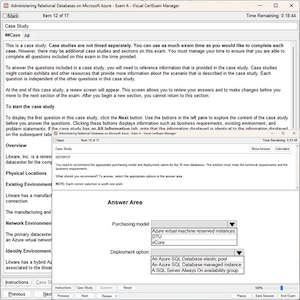
VCE
- Q&As Identical to the PDF Product
- Windows Only
- Simulates a Real Exam Environment
- Review Test History and Performance
- Instant Download Access
- Includes 365 Days of Free Updates
Passing Certification Exams Made Easy
Everything you need prepare and quickly pass the tough certification exams the first time
- 99.5% pass rate
- 7 Years experience
- 7000+ IT Exam Q&As
- 70000+ satisfied customers
- 365 days Free Update
- 3 days of preparation before your test
- 100% Safe shopping experience
- 24/7 Support
PMI PMI-ACP Last Month Results
Free PMI-ACP Exam Questions in PDF Format
Related PMI Certifications Exams
PMI-ACP Online Practice Questions and Answers
Questions 1
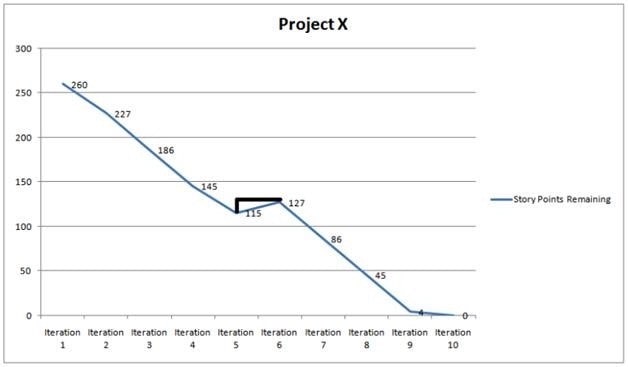
Based on the following figure, during Iteration 5, there was an increase in story point value (shown on the graph); however, the team completed all of the work it promised to deliver in the iteration and existing estimates were not changed. From this information, one can inferthat:
A. Work was removed from the Product Backlog.
B. Work was added to the Product Backlog.
C. The team's velocity increased.
D. The team's velocity decreased.
Questions 2
After performing three sprints, the product owner and sponsor request an accurate schedule indicating when all releases will be delivered. What should the agile practitioner do?
A. Calculate velocity based on completed sprints and triangulate the remaining work on the backlog to commit to an accurate schedule.
B. Decompose the product backlog into user stories with tasks/acceptance criteria and estimate to commit to an accurate schedule.
C. Use analogous estimating techniques based on projects with a similar velocity.
D. Provide a delivery range based on the team's estimated velocity.
Questions 3
A customer has difficulty explaining how the highest priority feature will work. What should the agile project manager do?
A. Create a time-boxed spike story to reduce the technical risk of the feature.
B. Commence an iteration 0 for the customer and the team to investigate the feature.
C. Facilitate the decomposition of the feature epic into more manageable user stories.
D. Facilitate a just-in-time exploration of the functionality by the customer and the team.
Reviews
-
souam
 MoroccoThere are many new questions in the dumps and the answers are accurate and correct. I finished my exam with high score this morning, thanks very much.
 -
Mussy
 Sri Lankathis dumps is useful and convenient, i think it will be your best choice. believe on it .
 -
ZzeezZ
 Libyai have achieved high score by using this dumps good luck to you.
 -
Artur
 United Arab EmiratesThe Dumb is valid 100%.100%
 -
Rhys
 Greeceupdate quickly and be rich in content, great dumps.
 -
Quennell
 EgyptThe new questions in the exam are not the new questions for me because I have met them when I used this material . So there is no doubt that I have passed the exam with high score. Recommend this material strongly.
 -
Lloyd
 Pakistanthis dumps is valid. All questions that I met in the exam are from this dumps !!!
 -
Jessie
 EcuadorI just pass the exam with 936. Thanks for helping.
 -
zill
 United KingdomWith the help of this dumps, i passed the exam perfectly. Thanks a lot.
 -
BAHMAN
 TurkeyAbout 3 questions are different, but the remaining is ok for pass. I passed successfully.



Home | About Us | Contact Us | FAQ | Guarantee Policy | Privacy Policy
Any charges made through this site will appear as Global Simulators Limited. All trademarks are the property of their respective owners.
Copyright © 2004-2026 pass2lead.com, All Rights Reserved.